HGTV Grows New Yard Makeover Show From Cutting

Chris Lambton, host of HGTV's latest yard makeover show, Dull as Dirt, I mean, Going Yard. I'm sure he's a nice man.

Generically hunky 30-ish host? 

Check.

Backyard “transformations” involving firepits, water features, and a big “reveal”?

Check.

Homeowners who host a party at the end of the show in their new “space”?

And theeeeere’s the trifecta.

Mmmmm-hmmmmm, I can barely summon the energy even to summarize HGTV’s new “landscaping” show.  But then, I don’t really need to, do I? 

Because HGTV has been making this same show since 1995.

They are REALLY sticking to this format, aren’t they?  So I guess they must figure we must REALLY like it, right? 

Well, somebody out there must like it because HGTV just keeps cranking it out, with only the most minor variations —  like the host’s hair is chestnut brown instead of sable brown, for example.  And it seems this latest host is sporting a Something About Mary style hair-do, so I guess that’s kind of new.

But I have to say, the producers are getting REALLY lazy with the titles. 

Going Yard?

Hang on…..

Oh sorry, I was just trying to imagine the incredible Meeting of the Minds that must have been that production meeting. 

Anyway, I know I’ve posted about Gardening Shows before, but I just want to re-iterate how desperate I am for some quality gardening TV.  Even a minor variation on the theme would be welcome.  How about an overweight host?  A couple who fights about their yard on the air?   How fun! 

Or maybe a twist at the end where the beautiful garden is revealed but then they cut to a closet in the house where there’s a hidden painting of a yard that just keeps getting uglier and more overgrown.   Ooooooh….

Now THAT I’d watch.

(Photo credit: HGTV)

ISO Garden Exorcist

Spirits dwell in my garden soil, and they're not beneficial nematodes.

I’m pretty sure my soil is haunted.

In trying to figure out why all the plants in this certain bed in my backyard keep dying slow, excruciating deaths, I have ruled out high pH, micronutrient deficiencies, marine clay, grubs, acid rain, and communist infiltrators.

I figure the only possible explanation for the gradual decline/death of five cherrylaurels, two Itea, three ostrich ferns and a river birch has to lie somewhere in the supernatural realm. 

I took Hort 101 at the local community college, which covered common pests and diseases, but rather egregiously omitted information about planting over indian burial grounds and civil war battlefields, purging your plants of evil spirits, and dealing with neighbors who may be practicing horticultural voodoo or botanical black arts in retaliation for aiming your downspout at their flowerbeds.

In mulling over which of these dark forces may be at work in this garden bed, it occurs to me there is a niche in the marketplace for a more supernatural skill-set.  Garden Coaches have been around for awhile now, but I think a reputable Garden Coach/Exorcist or Garden Sorcerer could get a fair bit of business. 

I definitely need one.

What Can Gardeners Learn from Grizzly Man?

“Human place in nature”  is a topic I’m semi-obsessed with right now, and though it seems sorta esoteric, I think the issue has huge implications for gardeners and designers.

Here’s what got me all stirred up this time.

I just finished showing the 2005 film Grizzly Man to my English classes as part of a unit on documentary film.  For those of you who haven’t seen it, it’s the story of the life and death of Timothy Treadwell, a self-proclaimed “kind warrior” who lived with the Grizzly bears in Katmai, Alaska for 13 summers in order to study and protect them.

Grizzly Man Theatrical Release Poster

Although Treadwell had a genuine love for animals and appeared to have better relationships with the bears than with other humans, he was actually killed and eaten by a Grizzly in October 2003.

Treadwell’s violent and somewhat ironic death is part of what makes the film fascinating, as is the question of whether he was a courageous hero or a lunatic narcissist.  But as I was watching the film with my classes this week, I was more intrigued by something else. 

The director of the film, Werner Herzog, clearly felt that Treadwell was — if not a lunatic — at least a misguided idealist. Though he might have had some sympathy for Treadwell, Herzog did not share the “kind warrior’s” warm fuzzy feelings about the natural world.  In his narration of the film, Herzog makes some bone-chilling statements about nature — statements that are in direct opposition to Timothy Treadwell’s romantic view of wilderness.  After a segment of the film in which a male grizzly kills a cub, Herzog reflects:

“I believe the common denominator of the universe is not harmony, but chaos, hostility, and murder.”

When Treadwell looked into the eyes of a Grizzly, he saw a kindred spirit, a friend, a brother.  Herzog saw no such thing, just “the overwhelming indifference of nature.”

Continue reading

Gardening with Children: a Shocking Expose

Ahhhhh, the joys of gardening with children!  How lovely to watch their sense of wonderment!  To see them skipping and frolicking in the flowers!  To observe with pleasure as they learn to nurture and respect the earth!

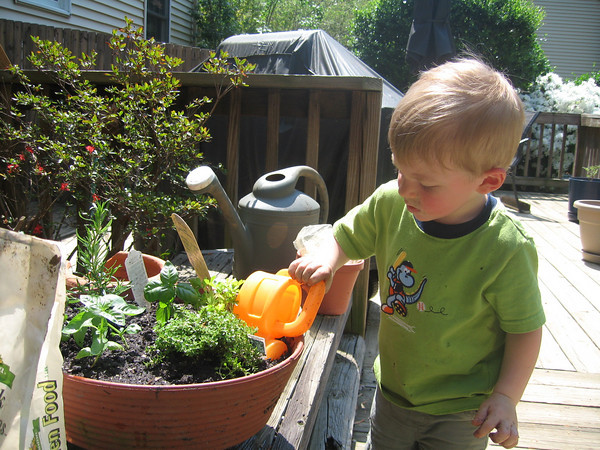
Here is a photo of my dear son, at age two, helping me plant a pot of herbs.  Isn’t he just adorable with his pudgy little hands and his tiny plastic watering can?  What a tender scene…helping Mommy water the plants!  Isn’t it all just so sweet?

Okay, maybe not all.

Continue reading

Another Question For You!

Thanks so much to all who commented on my last post, regarding the question of whether gardens and designed landscapes belong in the world of “art.”  Opinions were varied, with some suggesting that, “of course garden design is an art, you fool!” and others saying that they didn’t much care what sorts of labels were assigned to the practice of garden design, romping around in the world of semantics is for suckers, man. 

But what came through loud and clear is the passion that so many of you have for the art (or craft if you prefer) of garden-making.

Before I move on from the issue, though, I want to throw a related question out there:

Should there be more serious criticism of landscapes and gardens?

Continue reading

Are Garden Designers Artists?

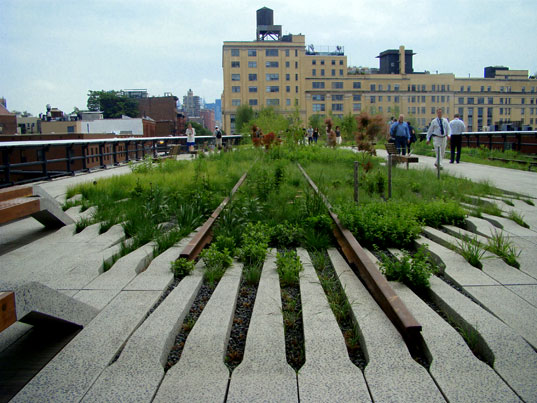
Art? Or merely Design?
The Highline, NYC http://www.inhabitat.com

When I’m not working, cleaning dishes, or yanking weeds, I like to kick back with a stiff drink and contemplate the differences between Art and Design.  I’ll admit, before I began my study of landscape design five years ago, I really did not have much exposure to the world of design — certainly not visual design anyway.  Except for one desktop publishing course, my college English courses were almost exclusively studies in poetry, fiction, and drama, all squarely in the “artsy” realm of language known as “literature.”

Continue reading

Peas, Poetry, and the Scientific Method

Tuesday afternoon it’s cool but sunny.  I’ve been eager to plant some peas – one of my favorite garden veggies but one I did not have great success with last year – and this brisk bright afternoon seems ideal.  I grab the seed packet and some tools and head out to the back deck to start the work.

I fumble with the peas, ripping open the packet then squinting at the tiny print on the back side: direct sow 4-6 weeks before last frost.  Yeah, I operate this way.  I dump the dirt in the pot, tear open the seed packet, and THEN double-check the instructions.  Sometimes I drill without measuring, too. When I cook I often heat my oil before everything’s chopped.  I estimate.  I eyeball. 

I suppose this is why I changed my college major from physics to English before the end of my freshman year.  I am delighted, enthralled, titillated with all aspects of science — both physical and biological – except the part where you’re supposed to be precise and accurate and follow a “Method” and look at “data.”  Ugh.  Better for me to drift on over to the English department where I can write poetry about grand trees rather than lab reports about xylem and phloem (which would be great names for a pair of kick-ass superhero twins in a short story, don’t you think?) 

Growing up, I loved listening to my dad talk about astronomy or geology; I loved learning to identify all the tree species in my neighborhood; I even loved reading my science textbooks.  In high school, though, Biology lab troubled me.  I know, it’s the part that’s supposed to “hands-on” and fun, but it filled me with anxiety.  I recall the objective of one lab was to determine the number of kilocalories in a peanut.  The “Procedure” involved jabbing a peanut onto a large pin and then setting it aflame with the Bunsen burner.  We were to calculate the temperature differential of a beaker of water that sat over the flame, and then plug said differential into an equation.

Two things about this lab stand out in my memory.  First, I skewered my finger on the pin.  Second, when my recorded measurements didn’t yield the result I desired (by my calculations a single peanut contained 197 kilocalories) I falsified my lab report.  At the neighboring lab station, Daniel Lee (who’d scored a 1580 on his PSAT) and his lab partner had recorded a result of 4.5 kilocalories.  No doubt Daniel had done a better job following the Procedure and hadn’t allowed unexpected variables — like drops of human blood — to mar his results.

I considered following the True Scientist’s Code of Honor and confessing all in the “Conclusions” section of the lab report: “Results were likely inaccurate for several reasons.  We may have burned a bit of human flesh along with the peanut.  Also, it was difficult to get an accurate temperature reading because frankly these lab kits were purchased in 1972 and the numbers are pretty much worn off the thermometers and to be honest, my lab partner and I were mostly talking about the Depeche Mode concert instead of paying attention to the experiment.”

It was a gamble.  Would my biology teacher reward honesty?  Or would it be safer to erase a few numbers, move a few decimal points around, and present the result I was supposed to have achieved despite unreliable lab equipment, chatty lab partners, and other unexpected variables?

With my peas, I’m still experimenting, and still feeling some anxiety.  I’m new at this and there are many variables – weather, soil, fertilizer, water, my ineptitude, etc. – but unlike high school bio it won’t do much good for me to lie about the results.  Either I will grow enough peas to cook a stir-fry or I won’t.

I drop the peas into an inoculant slurry in a glass jam jar and then agitate them with what I hope is just the right amount of vigor to get them completely coated.  Confession: I followed a similar procedure last year and got only about a cup of pea pods total.  But I also planted them in a fairly small container, didn’t provide them with a high enough trellis, didn’t stagger planting times, etc.   This year I’m altering those variables and I’m hoping for a bumper crop.

Science and poetry.  Variables.  Honesty.  Sometimes, like my peas, they can get all muddled up in a big slurry.  Is honesty rewarded in science?   Are motives confessed?  Variables acknowledged?   I watch environmental documentaries, where science is delivered with carefully chosen imagery and sweeping soundtracks.  Procedure: show factory belching smoke, cut to polar bear on chunk of ice.  Cue violins.  The poet in me is riveted, moved to tears; the scientist in me, the seeker of truth, is horrified.  I want to see the Lab Report.  What is your Objective?  Show me the data.  Pick up the bits from the cutting room floor, splice them back together.  I want that whole interview, not just the soundbite.  Turn off the music.  What did the economist say?  What did the Senator say?  What did the logger say? What did the logger’s daughter say?  Don’t show me a bar graph that’s three stories tall.  Show me the numbers.  Have three different people explain them.  Without metaphors.  Without hyperbole.  Without poetry.

Because if you’re not careful, you might persuade an entire country to heat the pan before they’re ready to cook.  To drill the holes before they measure.  To plant the seeds in the wrong place, at the wrong time.

See?  Metaphors.  Poetry.  Very dangerous.
Urban Homesteaders Leave Trail of Chicken Tears

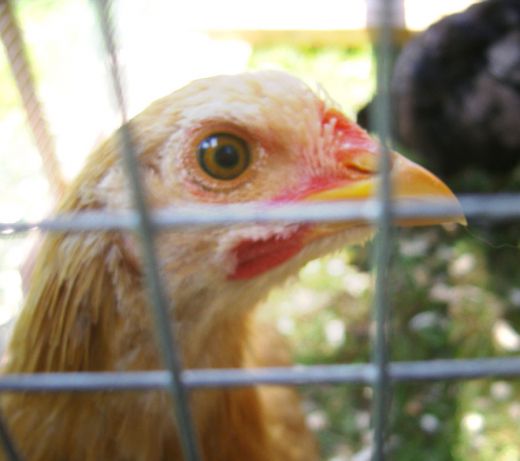
Chickens may not have big, sad eyes, but it's still a shame to see them homeless.

Here’s a depressing new facet of the urban homesteading trend — foster chickens

Turns out some people are as short-sighted about keeping chickens as they are about caring for traditional pets.  Some farm animal rescue organizations are receiving 10 calls a week from people eager to unload their hens and roosters.   This reminds me of how, a few months after the release of “101 Dalmations,” animal shelters received an uncommonly high number of Dalmation puppies who’d been impulsively purchased merely because they were darling Disney dogs.  

Now, there is nothing wrong with Hollywood producing endearing family films about cute dogs, nor is there anything wrong with all the recent books, magazines, and websites devoted to the joys of chicken-keeping.   But can’t we pleeeease just be a bit more level-headed and realistic when it comes to animal ownership? 

Chickens, like Dalmations, are not for everybody. And while I’ve no doubt they can bring great joy to the garden owner, a chicken is not like that cool new heuchera you spot at the garden center, that novelty purchase that you simply toss on the compost heap with a c’est la vie  if it doesn’t thrive in your garden.  Backyard chickens should not be viewed as garden ornaments or — like the Prius — some kind of eco-urban status symbol. 

While it may not be desirable, it’s also not tragic to neglect your garden plants sometimes.  You, the gardener, may be angry or even heartbroken over the loss of that Sasanqua Camellia, but in the end, a neglected camellia is not the same as a neglected and unwanted dog, cat, or farm animal. 

There is really no such thing as a low-maintenance pet.  They all require daily attention, and most likely, your affection.   They need to be fed and exercised and kept clean every single day.  Sooner or later they get old and sick and will probably cost you some money, maybe a lot of money.  So I hope that, in the midst of chicken mania, we will all please be wary about purchasing or adopting any life form with a heart and/or brain — even if  it’s a pea-sized brain.