Gardens and Language — What’s the Missing Link?

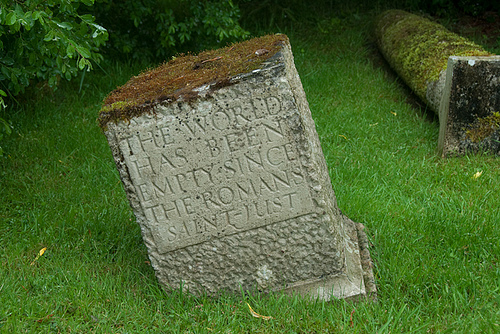
Garden sculpture at Little Sparta, designed by Ian Hamilton Finlay

I’m always fascinated by the ways that garden design intersects with other art forms.  The connection between gardens and painting is obvious and intuitive, and has a long history in garden design.  After all, English landscape “improvers” like Capability Brown were really attempting to create idealized landscapes common in paintings by the likes of Poussin and Lorraine. Continue reading

The Landscape Urbanism BS Generator

To follow up on my Top Ten Garden Buzzwords posts, here is a neat little doo-dad introduced to me by Stephen Ray, a landscape architect in the ASLA LinkedIn group:

The Landscape Urbanism BS Generator

Once you’ve opened the link, simply click on the “Make Bullshit” button, and voila! instant Landscape Architecture/Urban Planning Jargon BS is created for you!! 

I also wish somebody would invent a Pretentious Anglophilic Suburban Subdivision Name Generator, to randomly generate names in this well-loved format:

“The _________ at _________  ____________”, as in “The Mews at Crustington Manor”

The New American Meadow Garden

I haven’t had much time for blogging over the holiday break, but I’ve gotten plenty of reading done.   One of the highlights was The New American Landscape, published earlier this year by Timber Press.  

I found out about this book first at Garden Rant in their review and giveaway  – once again, I didn’t win! – and then was reminded of it in the latest issue of Landscape Architecture, who gave it a short but favorable write up in their book review section. Given my free-spending ways when it comes to books, and my bad luck at contests, I went ahead and purchased a copy from Amazon. 

Continue reading

2012 HGTV Dreamhouse Features “Bio-Native” Grasses!

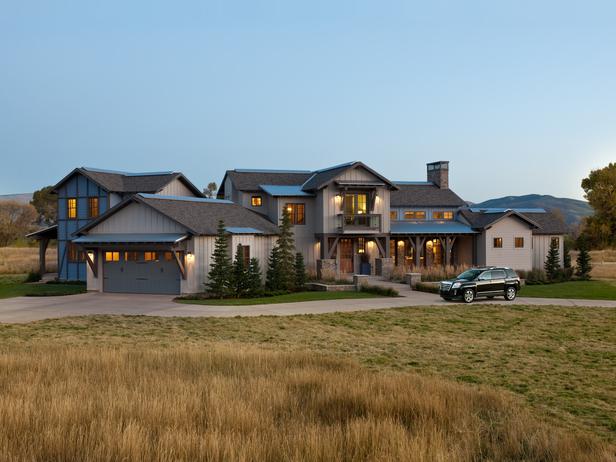
The 2012 HGTV Dreamhouse has been revealed!  It’s in Park City, Utah, and it looks to be set up as a skiier’s retreat.  Take a look:

What do you think?  I think the main part of the house is nice, but I wonder why they decided to stick that garage on at an angle like that.  And I’m not sure what that other little “wing” is off the back — or maybe it’s an outbuilding of some sort — but that’s kind of awkward, too.  Where the three structures’ rooflines converge looks crowded and random.  So the house doesn’t wow me.

But more importantly, what about the landscaping?  As far as I can remember (and I usually check out all the HGTV Dreamhouses; I even entered to win the one in Lake Lure, NC, back in 2006) HGTV has never shown off the landscaping of the house the way they are this year.

Continue reading

All I Want for Christmas is a $20,000 Dry Stack Stone Retaining Wall

We are lucky enough to have a backyard swimming pool, which is a total blast for our family in the summertime, and which by default becomes the visual center of attention for the whole backyard. Much of my “intensive gardening” takes place around this pool, since I like to make its environs as inviting and floriferous as possible in the summer.  Unfortunately, the pool is surrounded on two sides by nearly 100 linear feet of retaining wall made from those god-awful wooden railroad ties.

A glimpse of the timber wall. The sight of it even makes Max feel morose.

These railroad ties must have been all the rage with builders and landscapers back in the early 80s, because they are ALL OVER my neighborhood, which was constructed at that time.  I suppose they’re okay for some applications, but I really don’t think they should be “featured” in a garden as ours is  in our pool area.  Especially when they begin to rot, as our wall has.  It seems each year a new section of wall either collapses or is gnawed from the inside out by carpenter ants, and we’ve had to replace parts of it three times now.  This year, the corner section is going:

This part is totally deteriorating.

As you can see, I had the clever idea to grow cotoneaster over the wall in order to conceal it, or at least to distract the eye with something more comely.  Unfortunately, the cotoneaster is nearly as hideous as the wall, so that plan didn’t exactly pan out.  This summer, as I observed the timbers in this section of wall gradually decaying like teeth on a corpse, I decided , damn it, I’m going to get some estimates for a stone wall to replace this thing!  Stone…lovely, earthy, beautiful, weatherproof, ant-proof stone…once I began to imagine it, it was hard not to become completely infatuated with the idea of a gorgeous stone wall gracing my backyard.

For several weeks I gazed at images of stone walls on the internet.  I measured my site.  I sketched ideas: the wall would sweep around the pool in a gorgeous S-shaped curve, it would be mostly shades of gray but with some hints of orangy-earth tones to match the color of existing rock already scattered around.  It would be the prettiest wall ever.  It would be the Scarlett Johannsen of walls.

Time to get an estimate.

The first place I called was a local landscape maintenance company that I like.  Their estimate was around eight grand.  Pricey, yeah, but I knew it was probably on the low side.  I think this company would have built a good wall, but the vibe I got was that it wouldn’t necessarily have been an artful wall.  That’s what I want.  Artful. 

So then I called up another contractor I knew.  I became familiar with this contractor during my brief stint working for a local landscape designer in DC, and I knew the company did beautiful work and that they could definitely build an artful  wall.  So one of the guys came out, and he talked to me about what I wanted, and being the geek that I am, I described to him my “dream wall” and I even did a little sketch on his notepad.  And he was very nice, and he said we could go to the stone yard together to hand pick the stone, and he said, “maybe in the future we could consider some low-voltage lighting,” and he wove me a beautiful fantasy about the building of this wall. 

The last thing he said to me was:  “So I’ll call you in a few days with the estimate and we’ll go from there!”  Then he gave me a warm handshake and left me with an array of glossy brochures.

That was four months ago, and he still hasn’t called.

I was stood up by the stone wall guy!

The truth is, I suspect he was waiting for me to call him before he took the time to work up the estimate.  I suspect that, when we met, he glanced around and deduced from the plastic lawn furniture and cheap reed fencing that selling me an exquisite stone wall was probably unlikely.  So he gave me the brush off – sort of like in high school when the guy stops calling the girl once he realizes she’s not going to put out.

But he was right, damn it.  The reason I didn’t call him and ask “hey, where’s my estimate?” is because I’m pretty sure a beautiful stone wall built and installed by this company would set us back at least twenty thousand dollars.  Perhaps much more.  Even if I had that kind of money sitting around, I don’t know if I could bring myself to spend it on a retaining wall.  I have a good dose of thrifty Scottish blood in me which is constantly at war with my shameless and extravagant desire for a beautiful garden.   Twenty thousand for a car, a college education, emergency open-heart surgery – yes.  Twenty thousand for the wall? 

The railroad timbers aren’t THAT bad.

So in the meantime I will be taking suggestions for better plants to spill over my timber wall in order to camouflage it.  And I will be adding this book to my Amazon Wish List:

 It’s not as good as the “dream wall”, but it’s $19,975 cheaper.

Plant-Driven Design and My Garden Manifesto!

“The single most important element in any garden is not some particular object, plant, or tool.  What’s vital is a gardener who loves it.”  — Scott and Lauren Springer Ogden, Plant Driven Design

One of the reasons that garden design fascinates me is because of the push and pull between those two words: garden and design.  Put another way:  which is more important in gardenmaking – aesthetics or experience?  In Plant-Driven Design (perhaps my all-time favorite design book), Scott and Lauren Springer Ogden argue firmly in favor of experience over aesthetics when it comes to garden design.

Now, you could argue that being immersed in an exquisitely designed space is an experience.  Of course it is.  I’ve never visited the gardens of Versailles, but I have no doubt that it would be unforgettable, that its elegance, opulence, and vast scale would evoke a powerful emotional response, just as Louis and Le Notre intended.

But that’s not the kind of experience I’m talking about.  Nor is it the kind of experience sought by the Ogdens in their design practice.  Gardens are not only about pleasing the eye.  They are not simply “outdoor spaces” in which architecture reigns supreme and plants are used merely as flourish, or worse, as “material” by which to achieve architectural goals. They are adamant in their distaste for “landscape installations,” and the fact that the garden has been reduced to “a product, a home-improvement project, a look.”

In an Ogden garden — and in the gardens I hope to design — the plants run the show.  They are unequivocal in their belief that gardens should not simply be designed spaces, but rather places where people connect with plants. This is obvious when you flip through the book and see gardens bursting with a diversity of luscious plants, all carefully and lovingly chosen according to the conditions and spirit of the site.

It follows then, that the experience derived from a garden should really be an intimate one.  It should involve all the senses and involve them across time.  Buds should be examined, flowers sniffed, leaves crushed between the fingers in summer and in fall admired as colorful filters of sunlight.  Spring’s cool mud and summer’s baked clay should both be felt with the hands.  Death should be witnessed and accepted.

Obviously, this is not the experience Le Notre was trying to create at Versailles.  As the Ogdens put it, this is about “unlimited possibilities for reconnection with the natural world.”

Actually, what we’re talking about here is a relationship – a serious, long-term relationship.  The problem for the garden designer is that many clients do not necessarily seek this kind of relationship with their gardens.  Clients often want something “attractive but low-maintenance.”  In other words, they want a Stepford wife that looks pretty, serves up cocktails, and never throws them a challenge.  As a result, they wind up with a hardscape/cherrylaurel-based design that may be pleasant enough to look at but which will never touch the soul.

This is not acceptable.

Like the Ogdens, I believe that gardens should touch our souls through sensory experience with plants.  I know that there are different definitions of gardens out there, but I’ve adopted this one and I hope other homeowners and designers will consider adopting it, too.

The poet Gary Snyder said: “Nature is not a place to visit; it is home.”   Snyder may not have been trying to express a new paradigm for how we Americans should envision our gardens, but I think this quote expresses it perfectly.

The missing ingredients? Love and attention.

Most of us, when we buy a house, are given the gift of a quarter acre of soil and sunshine. (Or a half, or a tenth – size isn’t the point.)  Many of us don’t see our little patches of dirt as “nature,” but our lots are as “natural” as the local park, the fragment of forest at the end of the block, the meadow we admire on our favorite local hike.  Our yards are, collectively, the nature that is left, the nature we experience every day.  We should honor our little patches with our time, sweat, and creativity, not just design them as pleasant places to grill burgers.