National Christmas Tree Mysteriously Disfigured!

The 2011 National Christmas Tree needs a prune. http://www.wjla.com

I saw this posted on a local news blog last week and was kind of intrigued.  The picture clearly shows an odd bump at the top of the tree, but I couldn’t find any explanation for it, nor could I find out if the bump is still there. 

Continue reading

Junk on the Trunk

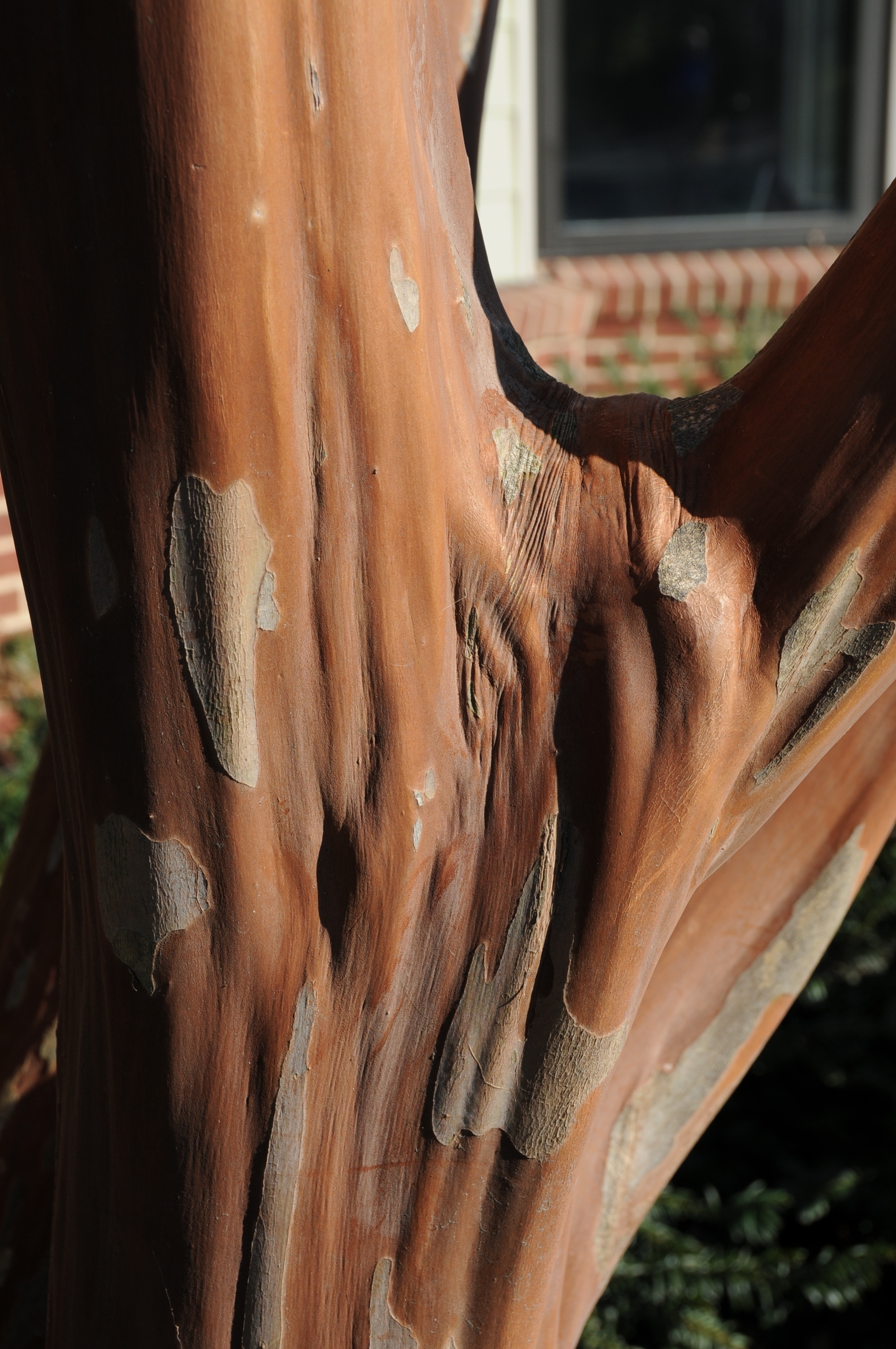
Here’s a few pics I’ve taken recently of some cool-looking tree trunks.  The first was taken at Green Spring Gardens in Annandale, VA, one of my favorite garden haunts.  They have a few mature crape myrtles in front of the visitor center there with the prettiest cinnamon-brown bark you’ve ever seen.  It helps that the folks there know how to prune crape myrtles; it really makes a difference in showing off the smooth bark.   With its coloring and muscle-like texture, the tree trunk reminds me of the flank of a thoroughbred racehorse.  I believe this is cultivar ‘Biloxi’.

Crape Myrtle 'Biloxi'

Continue reading

Poinsettia Paranoia

Photo by Karen J. Budd, taken at Longwood Gardens

If the guests at your Christmas party get really drunk and start eating your poinsettia leaves this year, a call to Poison Control will not be necessary.  Turns out that our favorite Christmas plant is not as toxic as we thought.

Continue reading

Current Plant Crush: Strawberry Foxglove

I'm still waiting for flowers like this. Maybe next year? http://www.bloomiq.com

Last spring I was re-designing a largish bed in my back yard – it’s sort of a weird bed because one side of it gets decent sun but the other side is pretty shady.  My plan included Fothergilla ‘Blue Shadow’, Deutzia ‘Chardonnay Pearls’, Carex pennsylvanica, Heuchera ‘Dale’s Strain’, and Sarcococca

After planting all of that, I stepped back and realized it was missing something.  I thought it would look cool to have some tall, spiky perennials dotted amongst these groundcovers and shrubs, and I was thinking something in the rose-pink family would do the trick, so I went back to the nursery to do some scouting.

It was then that I stumbled upon Strawberry Foxglove (Digitalis x mertonensis), which I knew nothing about it, but which looked promising.  Instead of going home to do research and see whether or not this plant would truly be a good fit – as a wise and disciplined gardener would do — I purchased five of them on pure impulse. 

At the time of purchase and planting, these foxgloves had no flowers or even buds; only the large, deep green, dimply leaves were present.  I waited patiently for them to show some buds, but it never happened.  Now, I know that the common foxglove, Digitalis purpurea, is a biennial, and that it would be normal for the flowers to emerge in the second year.  Strawberry Foxglove, however, is billed as a true perennial, and so I thought I might get a glimpse of its flowers the first year.

But no.

I will be bummed if these things never flower.  However, I must say that the toughness of their foliage has really impressed me.  During that terrible heatwave in July, when everything else in the garden was looking parched and withered, my Strawberry Foxgloves stayed fresh and green, with very little extra watering.

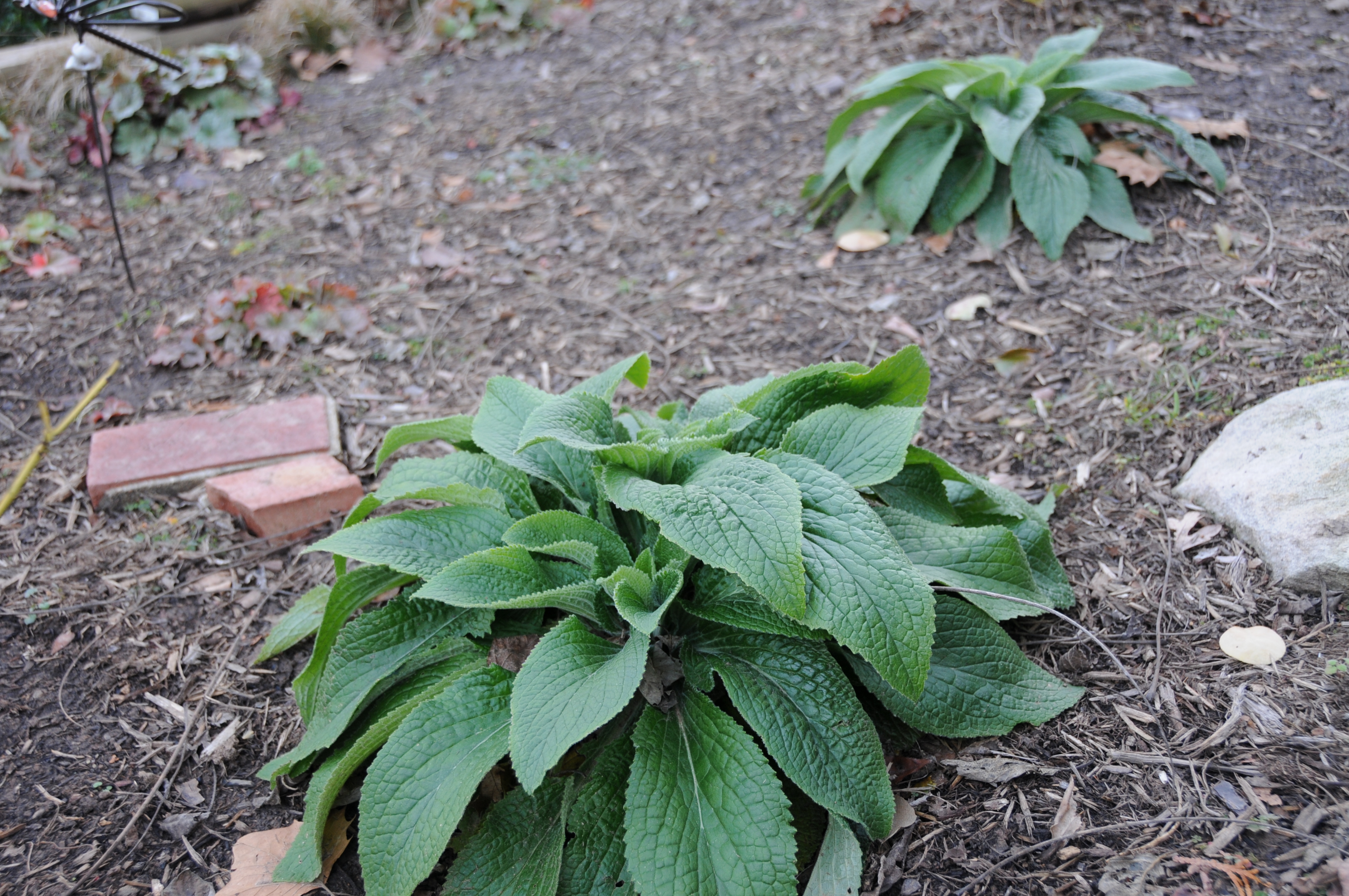
And even now, in early December, they are cheerful tufts of green among the straw-colored carex.  It looks like I have five big plates of spinach salad sitting in the garden:
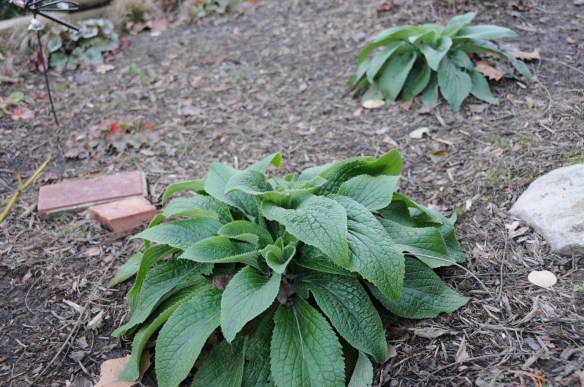
Strawberry Foxglove on December 1. I almost want to drizzle some balsamic dressing on it.

(I should also add that these foxgloves survived being dug up two weeks after planting — inexplicably — by my four-year-old son, who was enjoying an unsupervised and fairly destructive jaunt through the garden — a story best told in a separate post.)

Anyhow, if these things give me flowers next year – fingers crossed! – I will be smitten!
Introducing: Hydrangea x ‘Jenna Jameson’

 
Actually, it’s called ‘Incrediball’, but come on, my name is better. http://www.waysidegardens.com

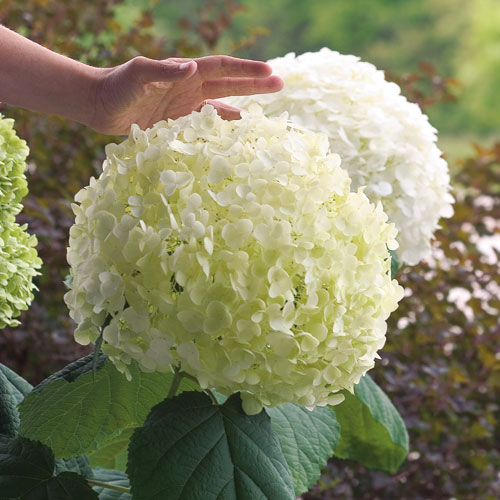
 Ha-ha.  Just kidding.  Its real name is Hydrangea ‘Incrediball’ and it was on all the catalogue covers a couple of years ago.  I remember seeing it on the cover of the Wayside Gardens catalogue and thinking, are you kidding me???

Now, I’m not a huge fan of the Smooth Hydrangea cultivars in the first place, so this new, freakish cultivar just makes me want to run into a closet and hide.  I like the classic ‘Annabelle’ hydrangeas in certain situations — a neighbor of mine with a Victorian style house has a nice Annabelle growing at the corner of the porch, and it looks dandy there.  Just right.

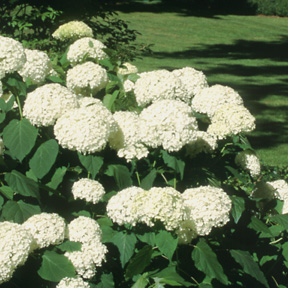
I know you already know what it looks like, but here’s ‘Annabelle’:

Hydrangea 'Annabelle' http://www.colorchoiceplants.com

It’s hard to imagine a couple of plant breeders standing in front of this shrub going, “yeah Bob, it’s nice and all but something’s missing…I think the flowers are just too darn small.”

In case you’re wondering what ‘Incrediball’s great-great grandmother looked like, here’s a picture:

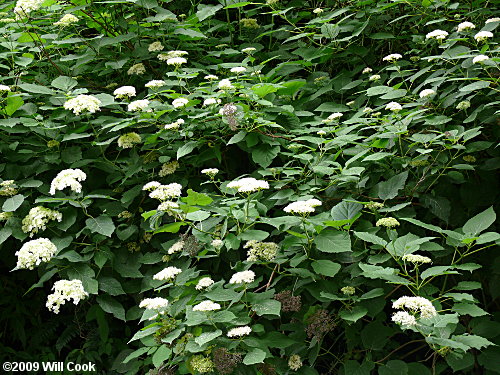
Hydrangea arborescens sp. http://www.duke.edu

She’s a real beauty, eh?  It’s the wild Hydrangea arborescens.  I’m not sure why we feel the need to breed this lovely plant into something bordering on the grotesque.  I guess it goes along with our natural American craving for bigger, better, more.

However, before I get too smug about my good taste, I should say that I looooove those ridiculously huge allium bulbs, like ‘Gladiator’ and ‘Globemaster’:

Let’s face it.  These are giant purple orbs floating above the rest of your plants.  So why are these cool and the ‘Invinciball’ just tacky?


Juglans nigra — The Tree that Poisons Other Plants (Part 2)

Poisonous and messy, but gorgeous! (http://tree-species.blogspot.com/

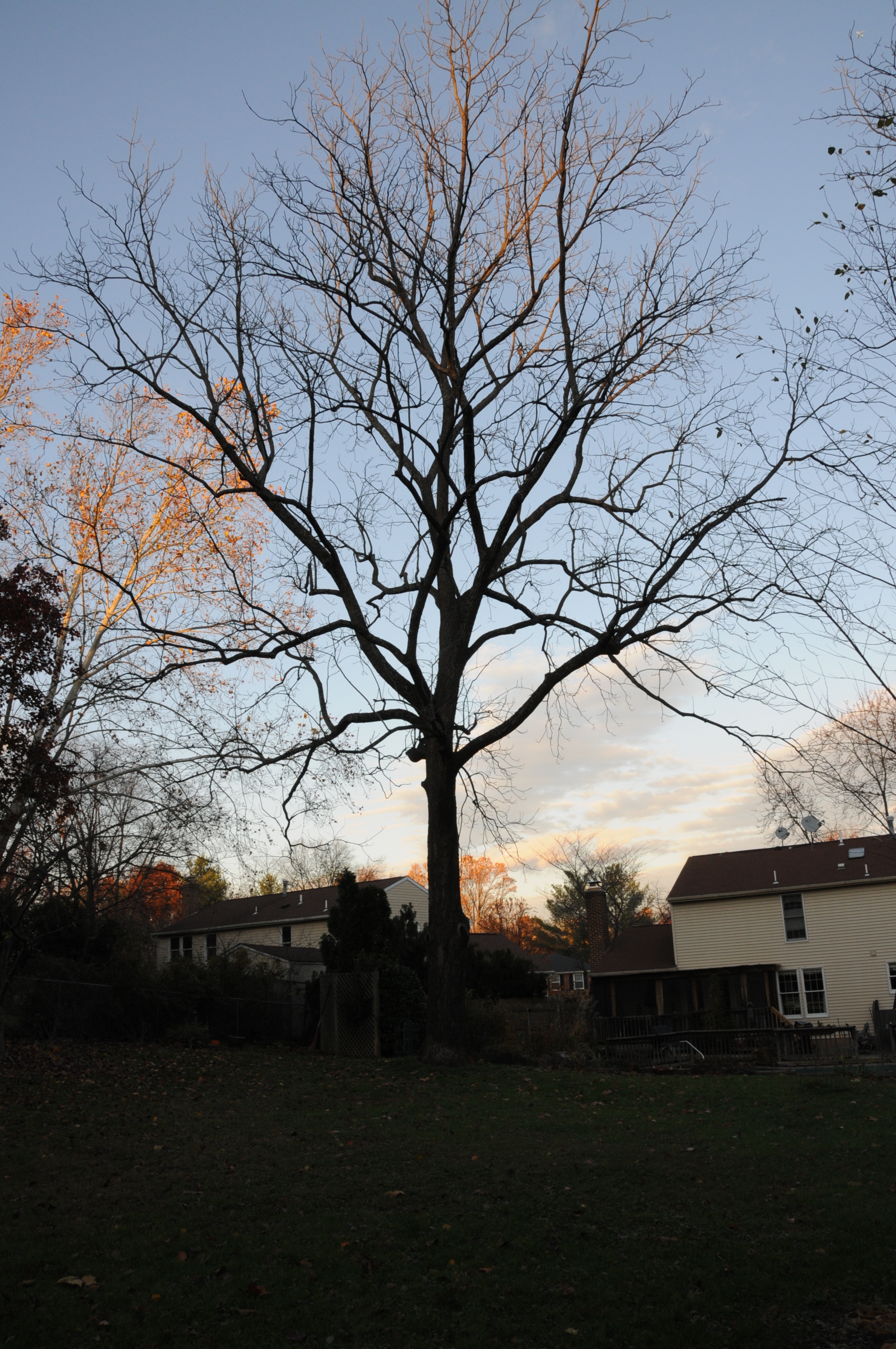
So yesterday I wrote about how the Black Walnut poisons other plants and is an all-around nuisance to have in the yard.  The Mid-Atlantic Gardener’s Book of lists places this tree on their list of “Trees That Have No Business Being in a Landscape” alongside the likes of Canadian Hemlock and Silver Maple (both of which I have and like — hmph!) 
 
I pretty much go along with the belief that this tree is a major pain in the ass.  My largest Black Walnut branches out over our pool, and it drops crap into the water and on the pool deck basically all summer.  In the early summer it sheds big yellow catkins, then a little later it’s the giant green nuts, followed shortly thereafter by the leaflets and really looooong leaf stems that get stuck in everything.  The decaying nuts leach out a dark-brown liquid that will stain a patio or deck and if you pick one up with bare hands they’ll be stained for days.  All of this might be tolerable if the valuable nuts didn’t require industrial equipment to remove the hulls, but alas, home harvesting of black walnuts is waaaay more trouble than it’s worth (at least for me.)
 
So why not cut them down?  Because they are gorgeous!  They have a lovely, light-filtering canopy and fantastic, spreading branch structure.  So yeah, this tree has many flaws and  leaves irritating messes behind all the time, but it is handsome and lovable anyway.  Sort of like your spouse. 

Juglans nigra — The Tree That Poisons Other Plants (Part 1)

This Black Walnut dominates my backyard

Just what a gardener needs in her yard – a plant that kills other plants. Thanks to a toxin called juglone, present in all of its parts, the Black Walnut tree wages chemical warfare with many other plants that dare to grow near it – usually through the root systems. Some plants are more sensitive to juglone than others, and since I have FIVE Black Walnuts in my backyard (hence the name of my blog) I’ve done plenty of research about which plants can make friends with my Black Walnuts and which ones are doomed to certain death.

The trouble is, the lists of plants that are “juglone-tolerant” that I’ve found online and at nurseries are far from exhaustive. Usually these lists will offer only about ten perennials that have proven themselves tolerant of the Black Walnut’s toxins. These include hosta (yawn), daylilies (kill me now), and something called Toothwort, whatever the heck that is. Plus a couple of others – like Hollyhock — that need full sun, which you rarely find beneath a gigantic shade tree.


The other problem with these lists is that they often conflict with one another. For

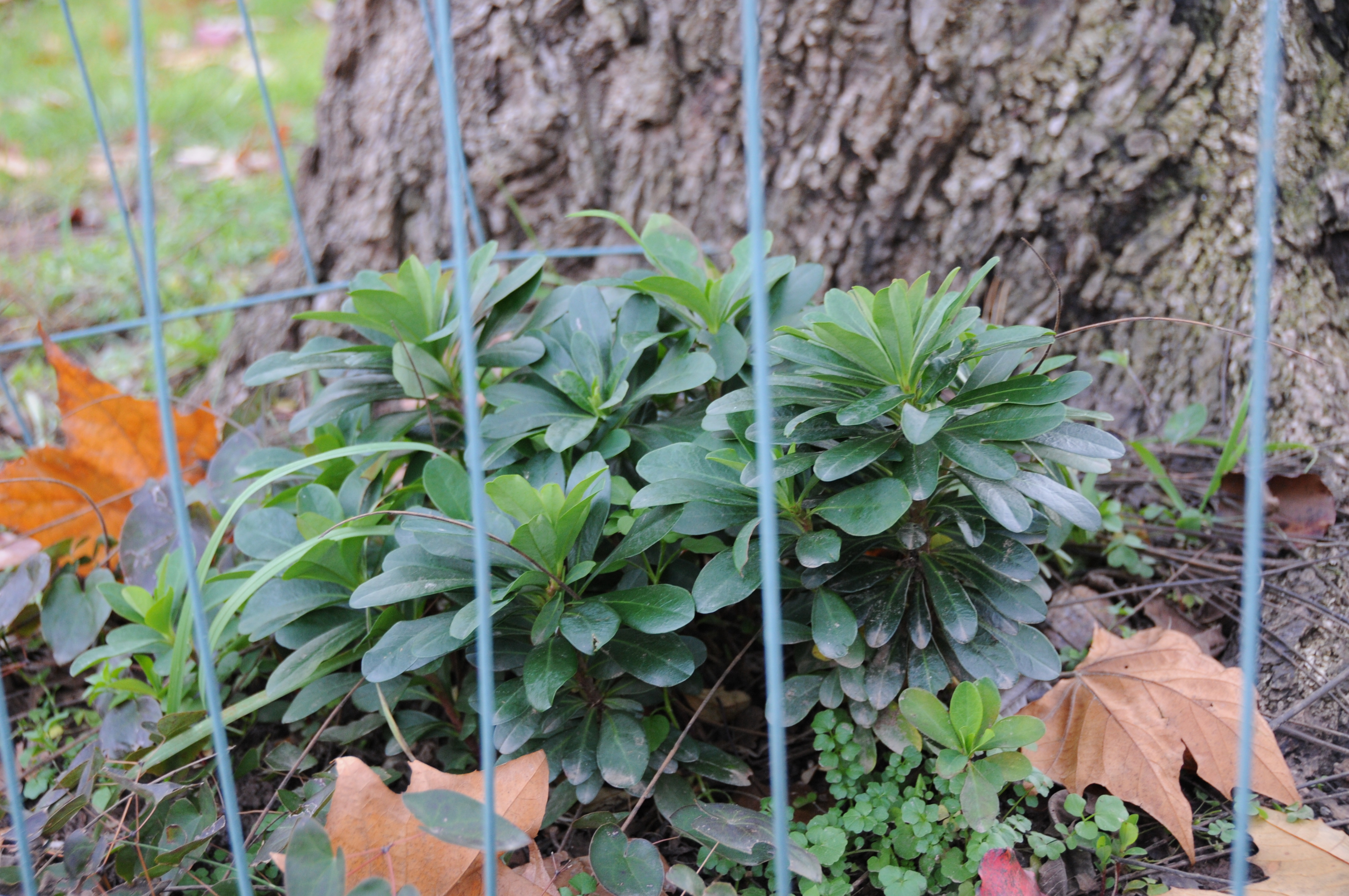
Little patch of Robb's Spurge grows happily at the base

example, I’ve seen Betula nigra (the gorgeous River Birch) tagged as both juglone-sensitive AND juglone-tolerant. Since these lists are so unsatisfactory, I’ve been living dangerously and trying out plants that aren’t necessarily on the “safe” list. At the moment I’ve got epimediums, rhodea, and Robb’s spurge growing at the base of one of my Black Walnuts, with fothergilla, sarcococca, bamboo, cotoneaster, digitalis, heuchera, and carex all under the dripline, and (so far) all thriving.

I wish there were a better resource for finding Friends of the Black Walnut.  GardenWeb has a “Black Walnut Support Group” where gardeners share their successes with Black Walnut companion plants.  The info at GardenWeb is scattered among several different forums, but it’s a good start.