Top Ten New Gardening Show Ideas

As many others have pointed out before me, there is a dearth of quality gardening programming in this country.  What a shame!  Here are some of my ideas to rectify the situation:

What Not to Plant.  Each week, a snarky pair of hosts selects a different homeowner who has no design sense whatsoever.  After forcing her to watch black and white videos of her hideous front garden, the hosts visit her home and tell her why all of her plant selections are god-awful.  Even if the homeowner protests (“But my grandmother planted those camellias!”) the merciless hosts whack each plant down one by one with a machete and toss them into a wheelbarrow.  But it’s all really funny because the hosts are super stylish and witty.

Gray’s BotanyAh, young love.  In this show, things get pretty steamy down at the County Extension Office.  Young, impossibly attractive horticulturists and plant pathologists breathlessly discuss soil test results and severe budget cuts ….does it get any sexier?

Kitchen Garden Nightmares.  The gardening world is waaaay too polite.  It’s not fair that cooking shows get bad-ass hosts like Gordon Ramsay and we get only meek, dewy-eyed creatures like P. Allen Smith (no offense!).  Kitchen Garden Nightmares would be an elimination-style reality show in which contestants compete to design, plant, and grow the most bountiful vegetable garden.  Elimination challenges would include who can make the best tomato cage out of old couch springs and who can concoct the most effective deer repellent using only bodily fluids.  But the real draw would be the ruggedly handsome but psychotically angry host, who would scream profanities at the contestants: “OH FOR F#@K’S SAKE!!  YOU DIDN’T PUT F#@KING INOCULANT ON THE F#@KING PEAS???  GET THE F#@K OUT OF HERE!”  When a contestant is eliminated the host would jab a pitchfork through a photo of his or her face.

Two and a Half Hens.  Sophisticated, twenty-something eco-couples argue over whether to use their urban chickens for eggs or meat.

Composting With the Stars.  Get an insider’s look at the kitchen scrap cans and compost heaps of the rich and famous.  Here’s a little teaser.  Gwyneth Paltrow : soybean hulls, peach pits, and organic carrot tops.  Jack Black: Frito crumbs.

So You Think You Can Cloud Prune.  D-List celebs compete to clip their hedges into whimsical shapes, as popularized by the likes of Piet Oudolf, Jacques Wirtz, and Thomas Rainer.  In the first episode Danny Bonaducci fashions a “sort of mashed potato blob” out of a yew bush.

24.  The sequel we’ve all been waiting for.  While Jack Bauer is out fighting terrorists and stuff, what is happening with his outdoor spaces all that time?  Featuring simultaneous, split-screen footage of his  lawn, shrubs, and flowerpots – all in real time.  (A slower-paced show for the older demographic.)

Curb Your Enthusiasm for Firepits.  In this show, three different landscape designers each present a design proposal to the same prospective client, who then selects his favorite.  The crazy catch: none of the designs may include a firepit.  Tune in to see if it can be done!

Pimp My Hive — Each week, an unsuspecting beekeeper is assaulted by a flash mob of designers who want to make his apiary more fabulous.

The Bulb Whisperer.  At a Montana ranch, a woman experiencing inner turmoil because her tulips won’t bloom seeks the help of a taciturn older gentleman: 

 “I hear you help people with bulb problems.”  

 “Truth is, I help bulbs with people problems.”

It’ll be really deep.
My Fungi are Smarter than Your Honor Student

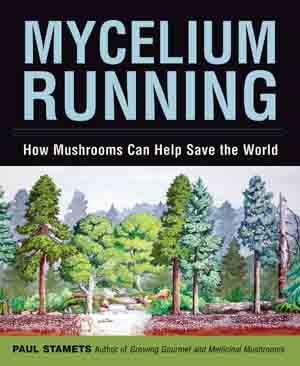
I’m going to continue my tradition of reviewing books several months — or in this case, years — after they’ve actually been published.  Mycelium Running: How Mushrooms Can Help Save the World, by mycologist Paul Stamets, was published waaaaay back in 2005, before I had kids.  If there was some sort of uproar when this book was published, I might have missed it because I was busy leading the devil-may-care lifestyle of the child-free: going to movies, meeting up with friends, sometimes even staying out past 8pm.

Now that I’m more domestic, I get to spend my evenings the way I’ve wanted to all along — reading books about obscure plants!

And let me tell you, if your attitude toward fungi is anything like mine was (disdainful, ambivalent at best) then you need to read Mycelium Running.

First, a word about terminology.  Mycelium refers to networks of fungus cells that inhabit soil or any other organic host — rotting logs, for example.  The fungi strands in this network are threadlike, microscopic, often only one cell wide.  Mushrooms, then, are actually the fruiting bodies of these mycelium. 

That’s not the cool part, though.

What blew my mind are some of Stamets’ pronouncements about this living network of mycelium: that it is a form of intelligence not unlike the human brain, that it can form mats which cover hundreds of continuous acres, that it can sense movement and distress in its ecosytem and work to repair damage, that it acts as “a collective fungal consciousness.”

 OMG, right?  Shoulda called the book Mycelium Rocking.

Continue reading

The Landscape Urbanism BS Generator

To follow up on my Top Ten Garden Buzzwords posts, here is a neat little doo-dad introduced to me by Stephen Ray, a landscape architect in the ASLA LinkedIn group:

The Landscape Urbanism BS Generator

Once you’ve opened the link, simply click on the “Make Bullshit” button, and voila! instant Landscape Architecture/Urban Planning Jargon BS is created for you!! 

I also wish somebody would invent a Pretentious Anglophilic Suburban Subdivision Name Generator, to randomly generate names in this well-loved format:

“The _________ at _________  ____________”, as in “The Mews at Crustington Manor”

Poetry Wednesday: “Beginning”

Yeah, I know, all the world needs is another “seed metaphor” poem, right?  Well, tough.

Beginning

We were small and hard.
We lived this way for years:
enclosed in coats impervious
to water, air, and light, drawing
from the pockets of sustenance
tucked inside of us.  We survived.

Some of us lay dormant as the earth
froze around us, warmed, froze again.
After many seasons the cycle wore us
down, dissolved our hard skins.
Then our first roots, fragile as gossamer,
reached into the earth.

Some of us drifted in salty seas under
the white hot sky, bobbing without
course for weeks, months.  At last
a small island, a spit of sand. 
There we opened up and received
life from the sun.

And some of us needed fire to begin.
Borne on cones that refused
to drop, we merged with our parent
trunks, lay embedded there
till the day flames raced across
the forest floor with terrifying speed
and purpose. In the heat and smoke
we were released and by the thousands
jumped, exploded, into the ashy air.

Now we are the lilies of the field,
the palms arching up from the sand.
We are the pines on the dry mountain.

–Mary Gray

New Virginia Flora Coming Out in Fall 2012

Now that all the retrospectives are over, it’s time to look ahead.  What horticultural events are you most looking forward to this year?

In addition to the Philadelphia Flower Show in March — which I’ve never attended but am determined to this year — I’m excited about the publication of a book. 

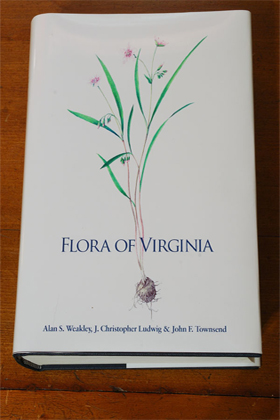
A draft of the new Flora of Virginia

Not a gardening book or a design book.  Nope, it’s the new Flora of Virginia, slated to come out in fall of 2012.  The book is being produced by The Flora Project of Virginia, partnering with several other groups: Lewis Ginter Botanical Garden, the Virginia Department of Conservation and Recreation, the Virginia Academy of Science, and the Virginia Native Plant Society.

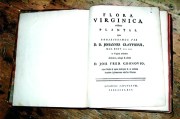
Flora Virginica, published in the 18th century

The old flora for Virginia, entitled Flora Virginica, was published in the mid-1700’s, so yeah, a new one is due.  The fact that it’s taken this long to produce a new one suggests that it’s a massive undertaking.

Continue reading

Blogging English Major Nerds

To follow up my last post, in which I lamented the loss of a favorite childhood tree, I wanted to share  a couple of other great posts that center on the Saying Good-bye theme .

First, Dan Verner, author of  Biscuit City, deconstructs that saccharine pop-song-that-you-say-you-hate-but-you-really-love —  “Another Old Lang Syne” — but he does so in the form of a Unit Quiz, as only a former English teacher would ever dream of doing.  Brilliantissimo! 

Then, the delightful young writer Miriam Hodgkins has a fantastic post on her blog Gomad Nomad,  in which she says good-bye to her dreadlocks after three years.  It’s wonderfully written, and if you are considering growing dreads (Mr. Verner, you know you’ve thought about it) this is a must-read!  Miriam has also just come home from an insanely adventure-filled jaunt around the world, and she’s done some stellar writing about her travels.

Continue reading

American Holly, American Beech, American Graffiti

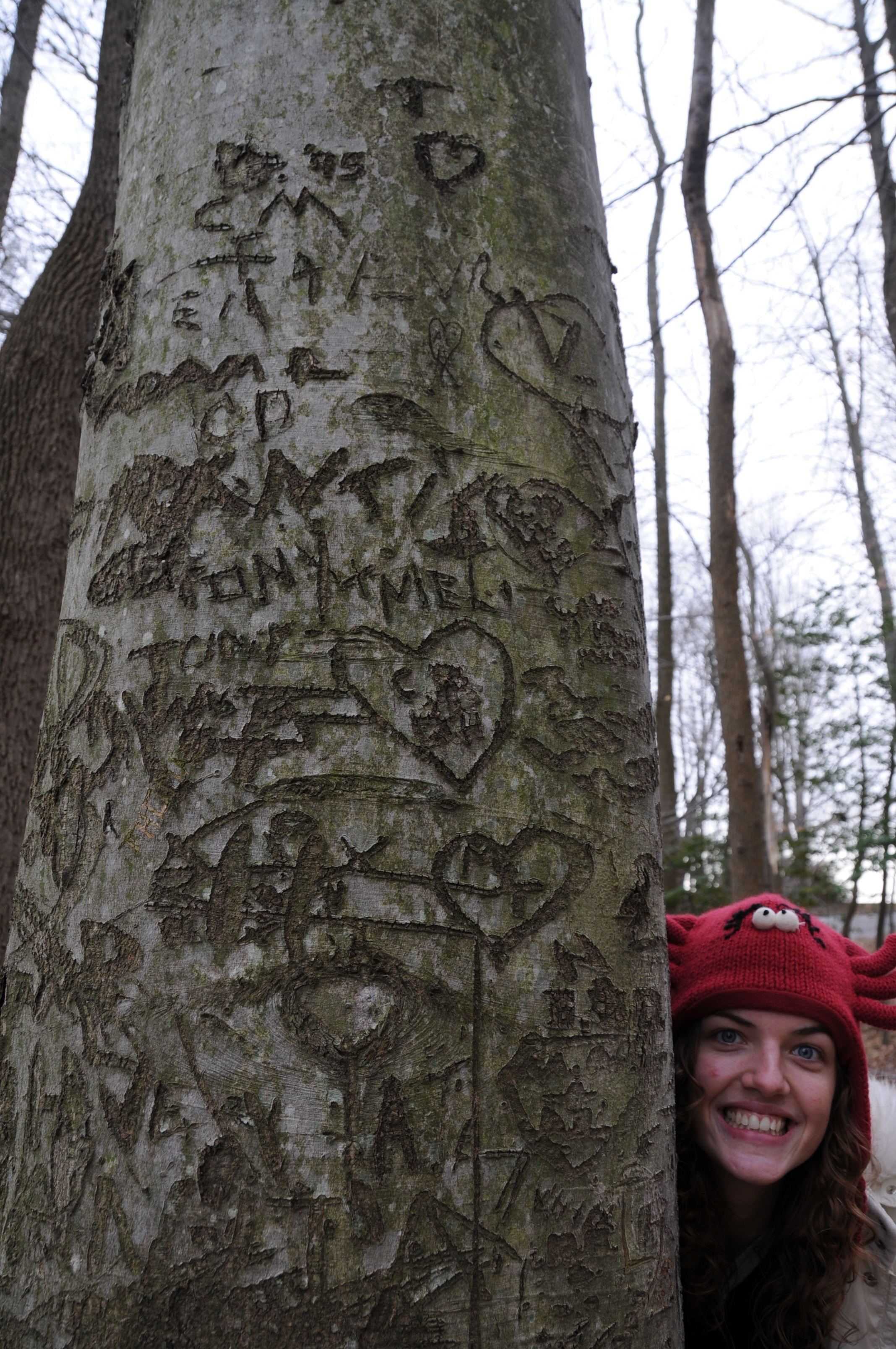
The gorgeous American Beech (Fagus grandifolia) has long been a favorite canvas for young couples in love and other graffiti artists.  My favorite nearby park is filled with beeches, tulip poplars, red oaks, and American hollies.  At this time of year, the beeches call attention to themselves, with their parchment leaves still clinging on, their smooth gray bark, and of course — on many of them — hearts and initials adorning the bottom six feet of trunk. 

F. grandifolia, a favorite tree, along with one of my favorite H. sapiens