Andy Goldsworthy — Designs On and Of the Earth

Andy Goldsworthy first appeared on my radar when I was studying Landscape Design at GW (more on that in another post).  I believe that one of my instructors devoted a few slides to him during a presentation on contemporary landscape design, and although Goldsworthy’s work looked intriguing, I never really investigated him further.

Well, yesterday I stayed up too late watching the film Rivers and Tides, a riveting documentary about Goldsworthy from 2001.  And now I am kind of obsessed with the guy.

I’m not exactly sure how to characterize what Goldsworthy does.  He’s not a landscape designer in the traditional sense, though he designs on (and with) the land more ingeniously than anybody I’ve seen.  I think most often he’s classified as a sculptor but that title is inadequate.  Judging from the film, Goldsworthy uses only natural materials – usually things he finds right at the site at which he’s working – and his creations are often intentionally transient: a sculpture built from icicles that will melt by noon, an egg-shaped cairn that disappears when the tide comes in, a stunning ribbon of colored leaves that disperses with a gust of wind.

If you were only to watch the interview portions of the film without seeing at him work, you might think Goldsworthy was a bit of a flake who perhaps did too much acid in the 60’s.  He speaks of such things as the earth’s “internal energy” and “geological memories” and you might start to roll your eyes and expect him to pull out his collection of Jerry Garcia memorabilia, but then he shows you something like this:
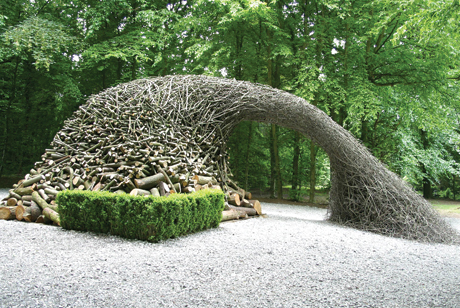
or this:

or – my personal favorite – this stone wall (at the Storm King art center in New York):

and then you realize that he’s not flaky at all but a total genius. 

I guess that’s one of the problems for a visual artist – whether he’s a painter, garden designer, or sculptor: trying to verbalize emotions and ideas that can only be fully expressed through paint, or flowers, or stone. 

Anyway, Rivers and Tides does an outstanding job presenting the work of Andy Goldsworthy through the medium of film.  If you have any interest in nature, design, landscape, sculpture, or artistic geniuses, you’ll love it.  But a word of caution.  After watching it you may feel compelled to go outside in your backyard and start doodling around with leaves and twigs, when you really should be inside getting the dishes done.
Are You a Blower, a Sucker, or a Slacker?

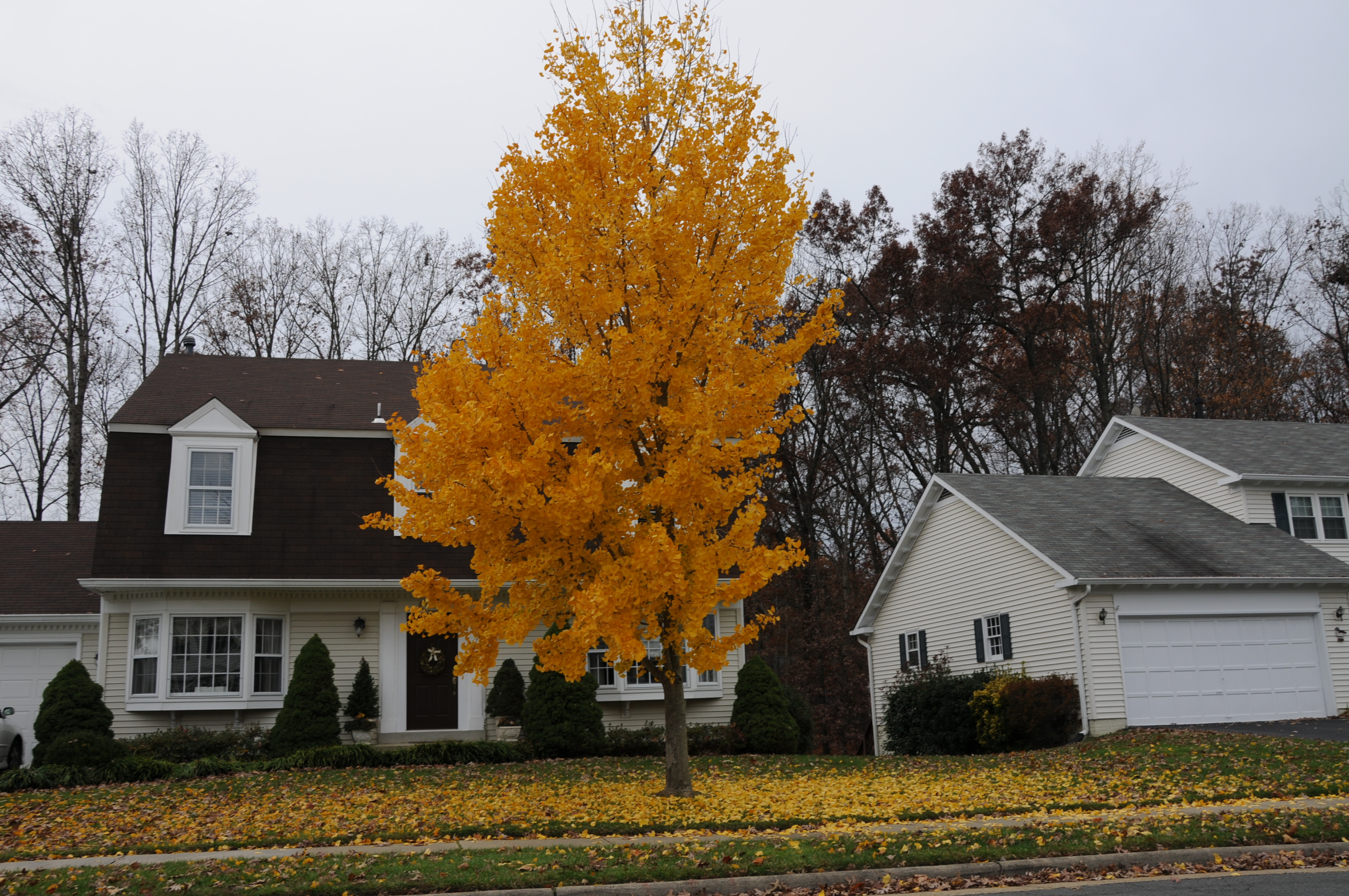
A Gingko tree in my neighborhood in fall splendor. (Note the unsightly golden leaves on the lawn.)

I had a whole nuther post written where I really had fun with with leaf blower double entrendres, but I decided that was a cheap trick and beneath me.  But I had to keep the title.

I live in a neighborhood where the Autumn Leaf Anality Index is pretty high.  I’d say about 8 out of 10.  If you allow your leaves to linger on your front lawn for too many days, you may be considered suspect.  Perhaps you won’t get an invitation to the 4th of the July block party.  Kids may avoid your house at Halloween.  What?  You say you have a heavily wooded lot and it just seems natural to let some of the leaves sit and decay where they are?  Sorry, no dice!  Allowing leaves  to accumulate on your property is outrageous, unsightly, and downright un-American!

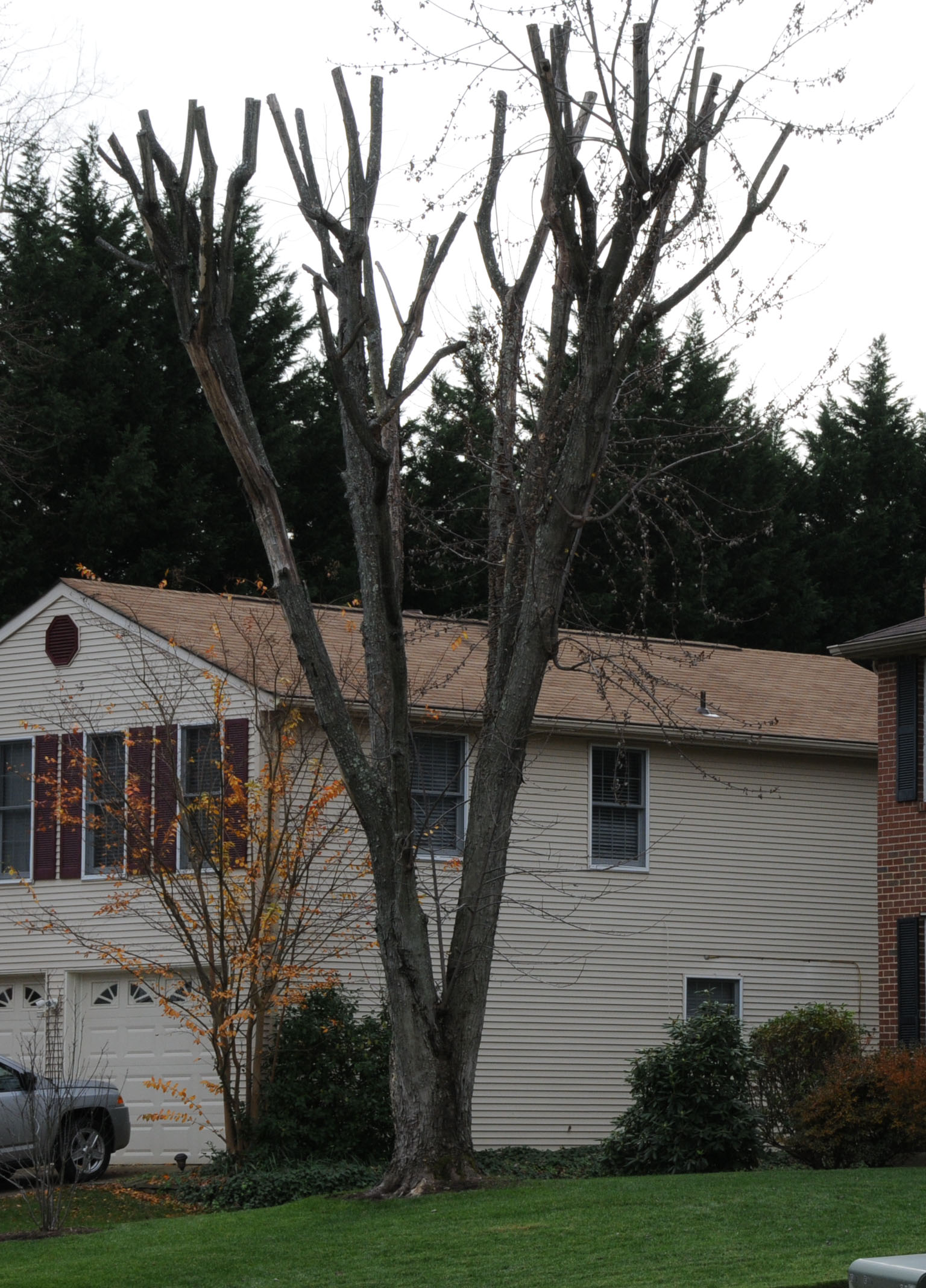
Look what one of my neighbors did to his poor maple tree just so that he wouldn’t have so many autumn leaves to deal with in the fall. If you look closely, you’ll see that he basically hacked off the top third.  Tragic!  Better to cut the tree down altogether than leave this mangled specimen standing:

A neat lawn doesn't make up for the deformed tree.


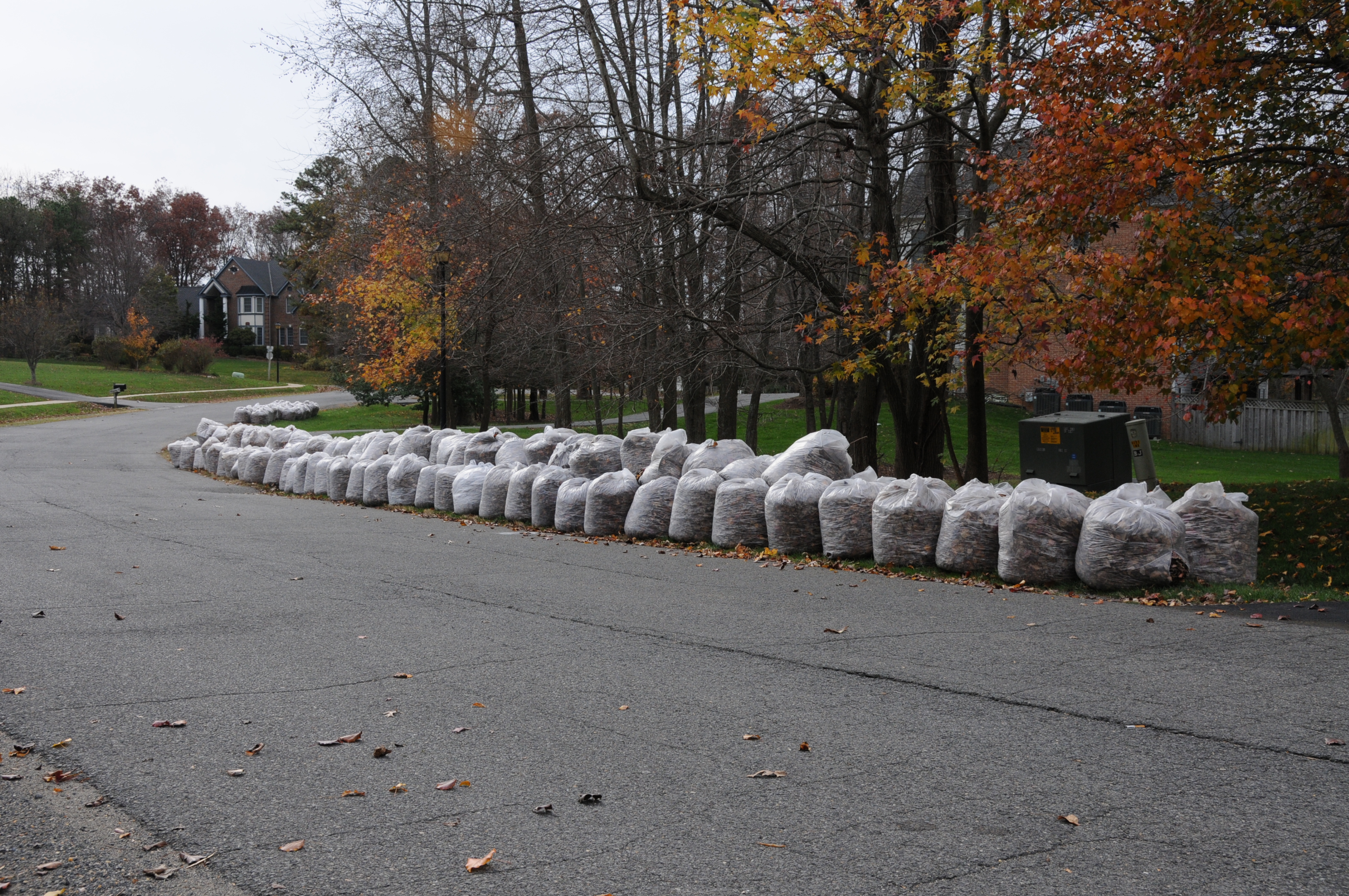
This final shot was taken in the neighborhood adjacent to mine, where the Leaf Anality Index is 10/10.  Good thing they’re getting rid of all that organic matter now so they will have plenty of room to lay down giant piles of mulch in the spring:

Also note the FOUR AC units along the house in the background.

Juglans nigra — The Tree that Poisons Other Plants (Part 2)

Poisonous and messy, but gorgeous! (http://tree-species.blogspot.com/

So yesterday I wrote about how the Black Walnut poisons other plants and is an all-around nuisance to have in the yard.  The Mid-Atlantic Gardener’s Book of lists places this tree on their list of “Trees That Have No Business Being in a Landscape” alongside the likes of Canadian Hemlock and Silver Maple (both of which I have and like — hmph!) 
 
I pretty much go along with the belief that this tree is a major pain in the ass.  My largest Black Walnut branches out over our pool, and it drops crap into the water and on the pool deck basically all summer.  In the early summer it sheds big yellow catkins, then a little later it’s the giant green nuts, followed shortly thereafter by the leaflets and really looooong leaf stems that get stuck in everything.  The decaying nuts leach out a dark-brown liquid that will stain a patio or deck and if you pick one up with bare hands they’ll be stained for days.  All of this might be tolerable if the valuable nuts didn’t require industrial equipment to remove the hulls, but alas, home harvesting of black walnuts is waaaay more trouble than it’s worth (at least for me.)
 
So why not cut them down?  Because they are gorgeous!  They have a lovely, light-filtering canopy and fantastic, spreading branch structure.  So yeah, this tree has many flaws and  leaves irritating messes behind all the time, but it is handsome and lovable anyway.  Sort of like your spouse. 

Juglans nigra — The Tree That Poisons Other Plants (Part 1)

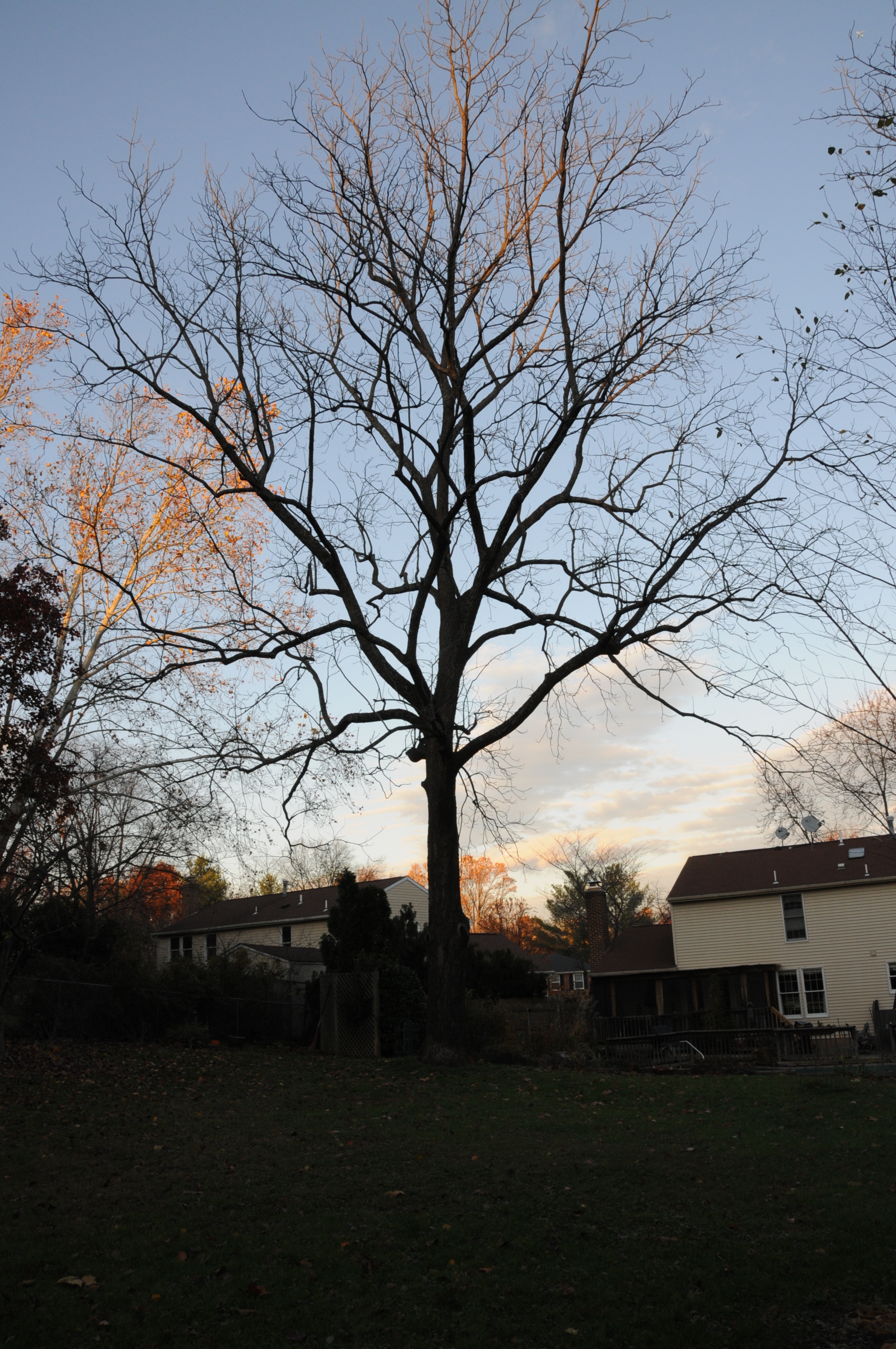
This Black Walnut dominates my backyard

Just what a gardener needs in her yard – a plant that kills other plants. Thanks to a toxin called juglone, present in all of its parts, the Black Walnut tree wages chemical warfare with many other plants that dare to grow near it – usually through the root systems. Some plants are more sensitive to juglone than others, and since I have FIVE Black Walnuts in my backyard (hence the name of my blog) I’ve done plenty of research about which plants can make friends with my Black Walnuts and which ones are doomed to certain death.

The trouble is, the lists of plants that are “juglone-tolerant” that I’ve found online and at nurseries are far from exhaustive. Usually these lists will offer only about ten perennials that have proven themselves tolerant of the Black Walnut’s toxins. These include hosta (yawn), daylilies (kill me now), and something called Toothwort, whatever the heck that is. Plus a couple of others – like Hollyhock — that need full sun, which you rarely find beneath a gigantic shade tree.


The other problem with these lists is that they often conflict with one another. For

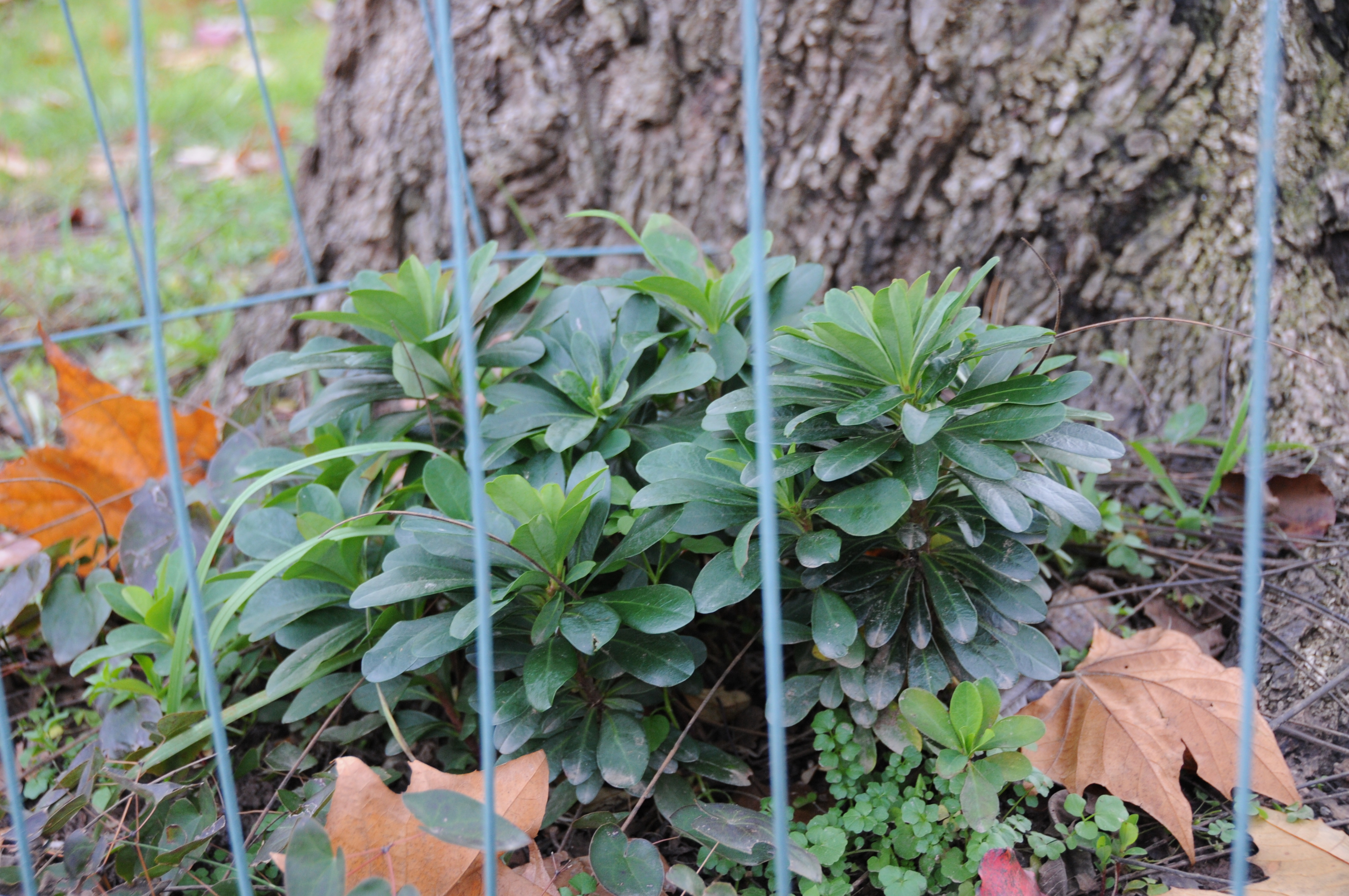
Little patch of Robb's Spurge grows happily at the base

example, I’ve seen Betula nigra (the gorgeous River Birch) tagged as both juglone-sensitive AND juglone-tolerant. Since these lists are so unsatisfactory, I’ve been living dangerously and trying out plants that aren’t necessarily on the “safe” list. At the moment I’ve got epimediums, rhodea, and Robb’s spurge growing at the base of one of my Black Walnuts, with fothergilla, sarcococca, bamboo, cotoneaster, digitalis, heuchera, and carex all under the dripline, and (so far) all thriving.

I wish there were a better resource for finding Friends of the Black Walnut.  GardenWeb has a “Black Walnut Support Group” where gardeners share their successes with Black Walnut companion plants.  The info at GardenWeb is scattered among several different forums, but it’s a good start.

My First Post! or “Un bon croquis vaut mieux qu’un long discours”

We all know the adage “A picture is worth a thousand words.”  As a person who loves to write, I’ve always taken exception to that saying.  I mean, it depends on the words and the picture, right?  If I were to weigh one of my 8th grade art projects against, say, ten of Shakespeare’s sonnets, well… you can see where I’m going with this.

However, I have a feeling that most blog-readers don’t have much patience for long-winded writing.  Short and sweet is where it’s at.  Therefore, my blog is going to emphasize pictures rather than text.  Don’t get me wrong, I’m sure I’ll ramble on plenty at times, but I’m officially declaring that imagery will carry at least as much emphasis as words here.

Apparently, some historians credit the expression “A picture is worth a thousand words” to Napoleon, who originally said:  Un bon croquis vaut mieux qu’un long discours  or  “A good sketch is better than a long speech.”  Since Napoleon wasn’t really known for art or speeches, I’m not sure why we should listen to him, but I figure including a quote – especially one in French – lends a certain, um, gravitas to my first posting.

Anyway, welcome to my blog!