
A winter vignette from Mary's garden! Featuring: mud, dead leaves, old bags of planting mix, cheap hoses, rusty stakes, and disillusioned pets.
Ahhhhh yes, the garden in winter. So serene. So magical. So frosty and twinkly!
That is, if you live in the pages of one of those “Winter Gardening” books or articles, which always include the following photos:
1. a cardinal sitting on a snow covered holly branch
2. a close-up shot of a berry cluster, possibly glazed with ice
3. some evergreen boughs adorned with fairy lights, once again with a fine dusting of snow
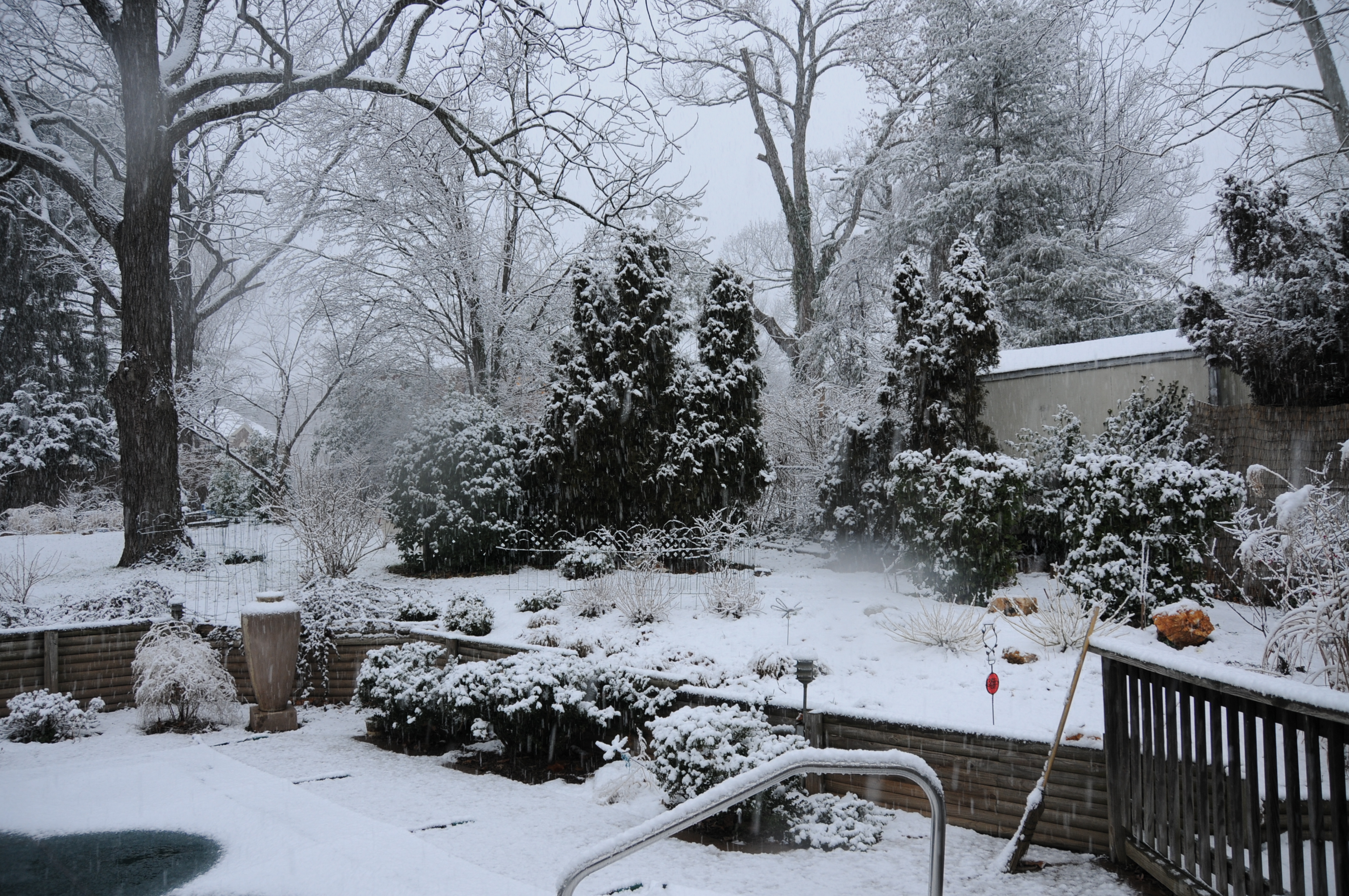
Okay, fine. I know that winter gardens can be beautiful, but let’s be real. This thing where there’s a half inch of fluffy snow highlighting the fine tracery of tree branches and creating a Currier and Ives wonderland is waaaaaay overrepresented in the gardening literature. How often does it snow like that? Where I live in Virginia, I can count on such a scene for maybe six to ten hours each winter. Here’s a shot of a lovely, light snowfall from earlier this winter:

I think it made my backyard look rather nice. On the other hand, it made the landscaping down at the local Shell station look like a friggin’ landscape design masterpiece, so I don’t really think it’s fair to critique winter landscaping under these conditions. Plus, by 3pm it was all melted and I was left with my more typical winter landscape in shades of brown, tan, greenish-brown, tannish-brown, brownish-olive-green, doo-doo brown, and “mud” brown. And all of it squishy.
Unless you are gardening in Camelot — where it snows an inch a day, melts overnight, and then snows again in the morning — your garden will not be graced with a fine dusting of fresh snow all that often. So what to do? How to design for winter?
Well, I’ve been mulling this over, and today I wandered around my backyard asking myself that very question. Here are a few thoughts I had during my stroll…things I’m going to keep in mind for the future:
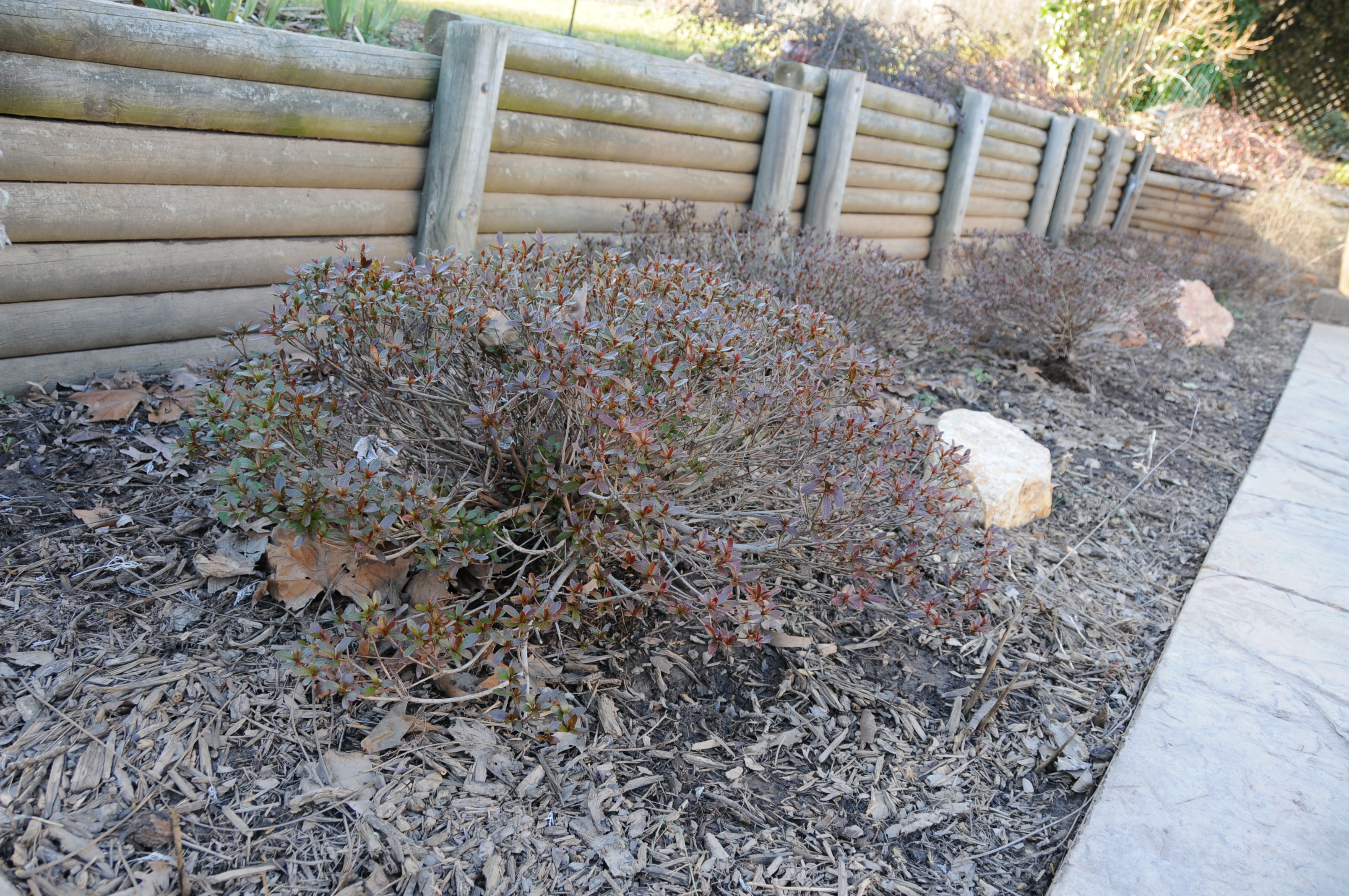
#1 Consider the winter color of evergreens. Because there’s a good chance it won’t be green. Many evergreens, like these ‘Macrantha’ azaleas in the photo below, turn a sort of muted plum color in the winter. This is a characteristic that could be used to your advantage if you can find other plants to contrast or complement this plum color (bergenia?carex? any other ideas?) In my planting, though, they fade right into the brown of the dirt around them and the timber wall behind them. So the whole advantage of being evergreen is sort of lost.
‘
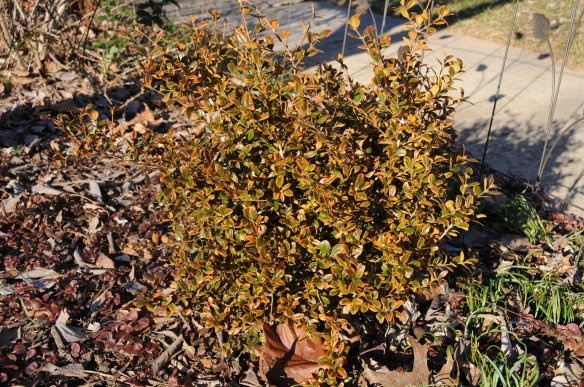
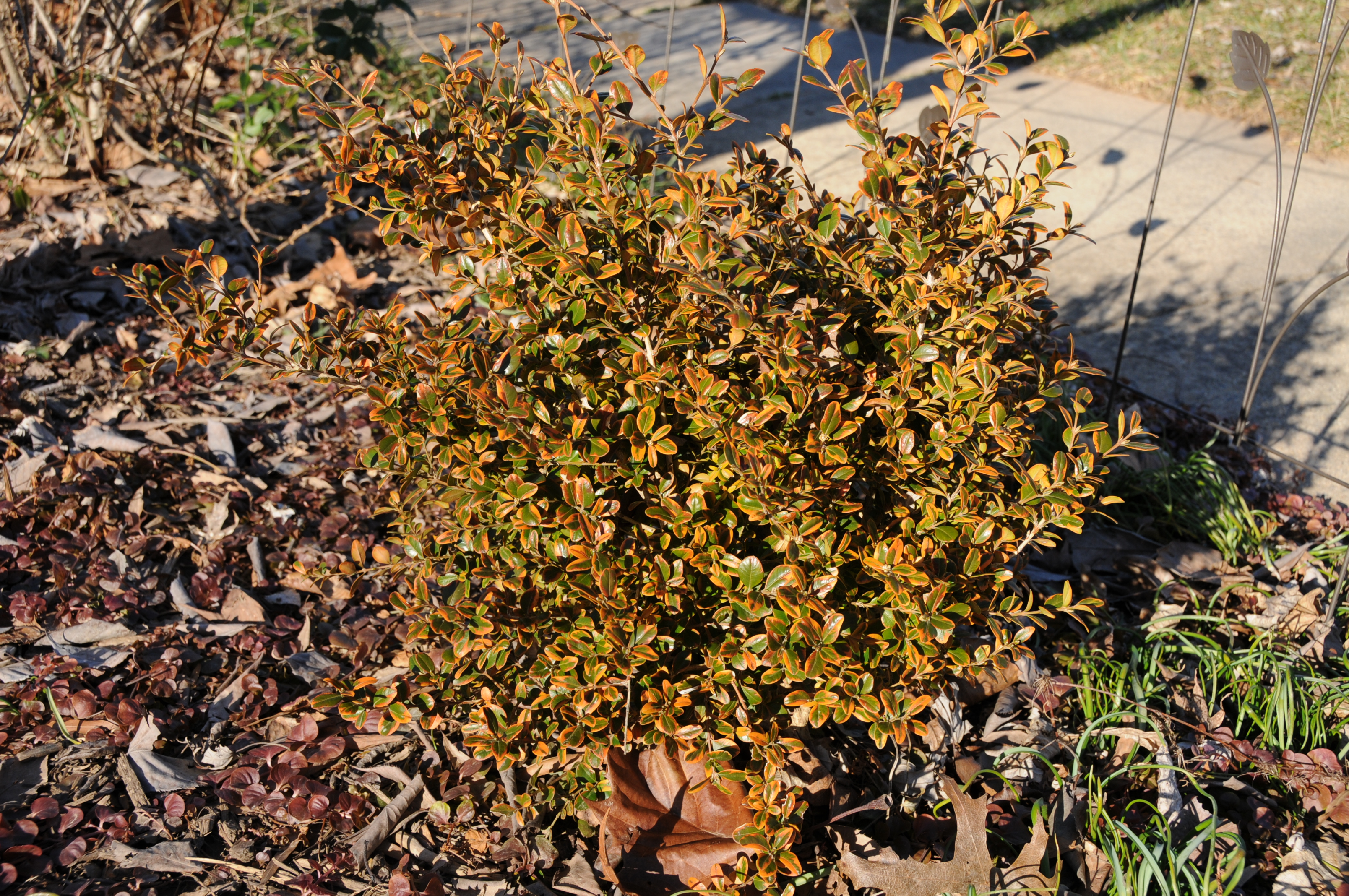
Another example: the variegation on this dwarf boxwood in the photo below changes from yellow to rusty-orange in winter. How cool is that? I am dying to pair something with this shrub to make a winter combo extraordinaire…I just haven’t figured out what yet. Would you hate me if I planted orange pansies around it?
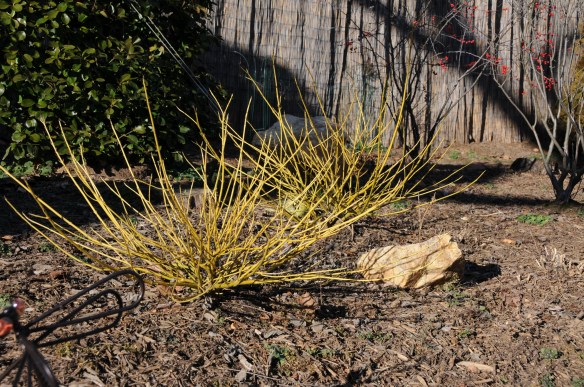
#2 Colorful Stems = Best Horticultural Invention Ever Last spring I planted three Yellowtwig Dogwoods (cultivar “Green and Gold”) and I could not be more fond of them. If I’m feeling morose, I make a point of looking out my kitchen window at them and they cheer me right up. Now…as much as I love colorful stems, I don’t know if I would plant a shrub if that were its ONLY worthwhile attribute. But this cultivar looks cute in summer, too…not too big and unkempt like other shrub dogwoods, nifty green and white variegated foliage…yup, it’s definitely pulling its weight in the garden.
#3 Berries Rule! If they are not too eagerly consumed or used as projectiles! As you can see in the photo above, I’ve got a few Winterberry Hollies in this garden, and they are looking pretty sad and sparse at this point. Earlier in fall, they were loaded with berries and totally looking stellar next to a glorious clump of tawny Miscanthus. But the birds really do seem to like these berries, which is reason enough to plant them. Plus, certain five year olds can’t seem to keep their little fingers from plucking them off and either a) hurling them at imaginary foes, accompanied by exploding noises or b) stomping them into a pulp on the wooden deck. But I guess this is all part of the winter garden experience.
#4 Plant perennials that die with dignity. My favorite pictures of winter gardens are not the ones with the dustings of snow, but rather the ones that feature large masses of perennials and grasses that remain standing through the cold months in all their brittle, straw-and-russet-colored glory. What’s missing from my winter garden is the texture, color, and sheer mass that exists in such plantings. I’ve just got too much empty space.
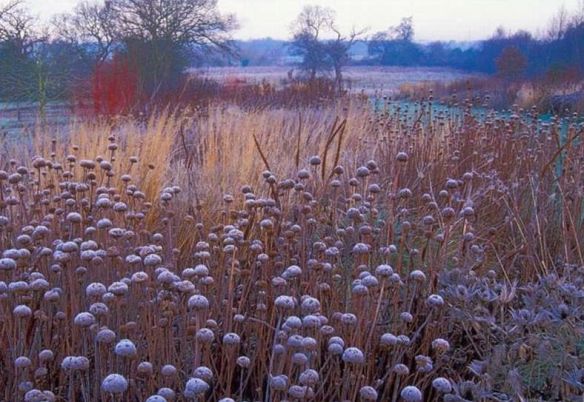
The legendary Piet Oudolf has left me, and probably millions of other winter gardeners, striving for this ideal. It looks so easy but it is truly the work of a genius. Photo credit: Piet Oudolf.
Some gardeners think that planting evergreens can solve this dilemma; however, too many evergreens make a landscape look monotonous, so the trick is to figure out which herbaceous perennials retain strong stems and/or cool seedheads, and plant more of those. Many ornamental grasses fit the bill. Sedums, yeah. I don’t cut those back. In the spirit of Piet Oudolf and Oehme/van Sweden, I really want to keep all of my perennials standing through winter, but my garden phlox and my turtlehead? Oh man, they just have to go. I can’t bear to let their limp, eviscerated corpses lay strewn about my garden. Leaving too many gaps, though, becomes a problem. Does Piet Oudolf leave gaps? I think not.
#5 Have fun with winter vignettes. I think it’s a great idea to have a few places in the garden in which plant combinations are created specifically for winter appeal. When I worked at a garden center one year, I was driving one of those electric carts back to a lot where the surplus plants were stored. It was late fall, and as I was speeding along, a couple of random plants caught my eye — a Nandina domestica and a red Camellia sasanqua. The pairing of the red berries and deep red flowers, of lacy and glossy foliage together, was stunning. I slammed on my brakes and just stared at this marvelous combo for several minutes. It was lush and bold and wintry all at the same time…and no snow necessary!









 Black Walnut Dispatch